Blog
Tips & local guides
2026-08-31
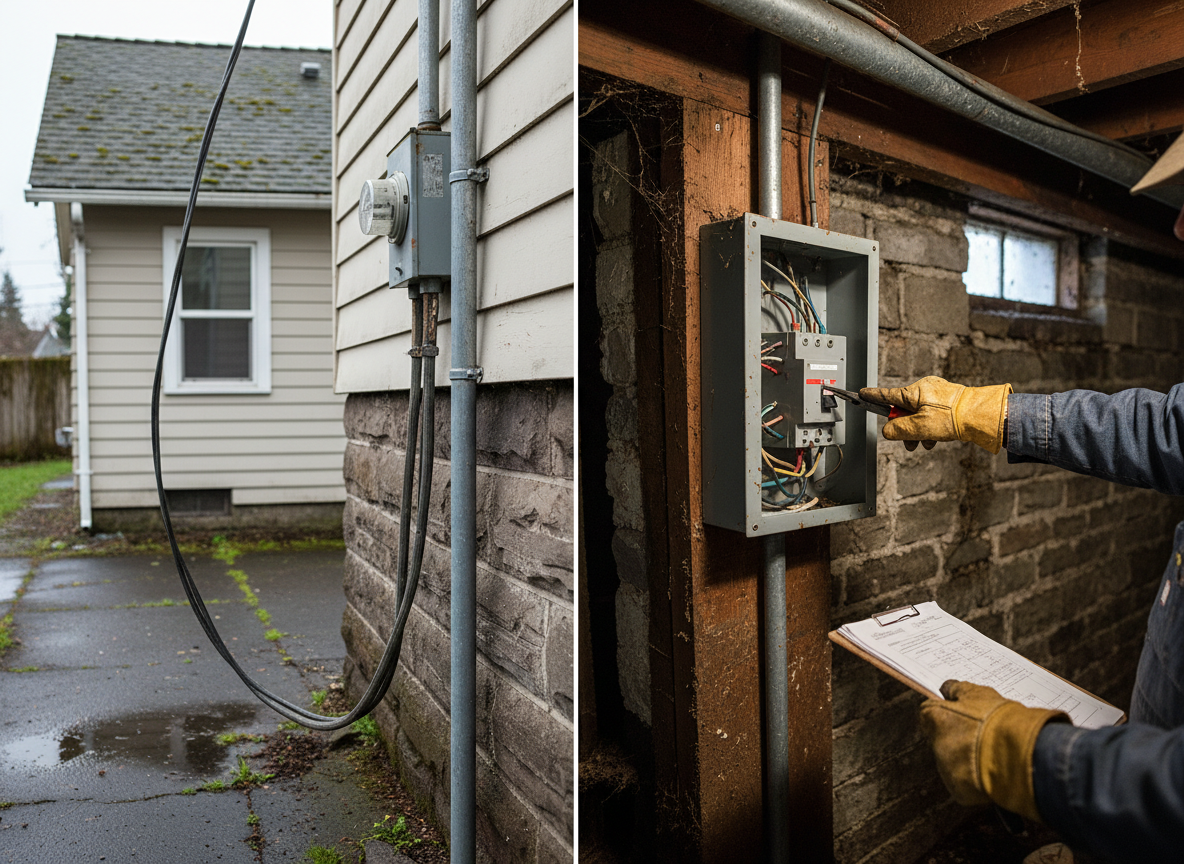
Portland General Electric Service Drop and Weatherhead: Which Parts Are Yours and Which Belong to the Utility
When storm damage hits the overhead line to your house, the repair bill depends on where the damage sits. This guide draws the exact ownership line between Portland General Electric equipment and yours.
2026-08-31
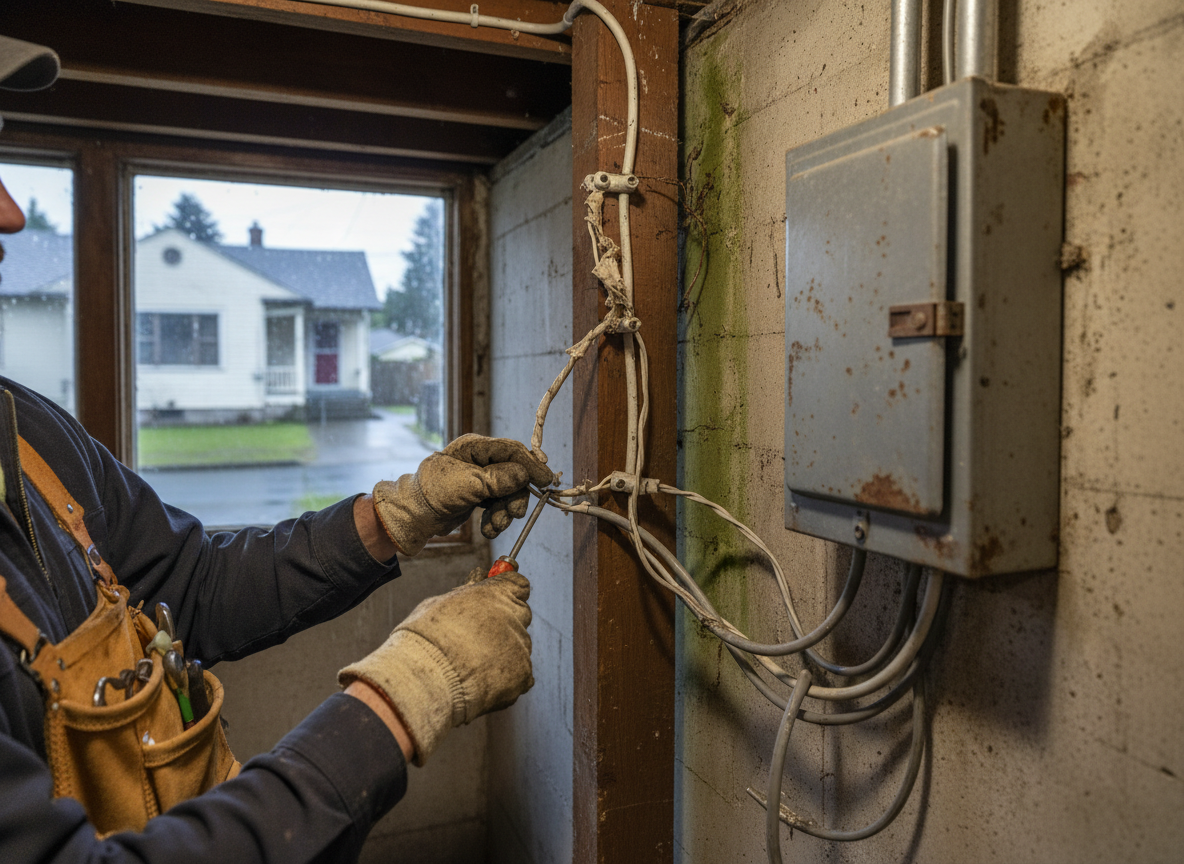
Knob and Tube Wiring in Pre 1940 Portland Homes and What Insurers Actually Ask About
Insurance companies do not automatically refuse homes with knob and tube wiring, but they ask pointed questions before writing a policy. Here is what they ask, why they ask it, and how to answer honestly.
2026-08-31
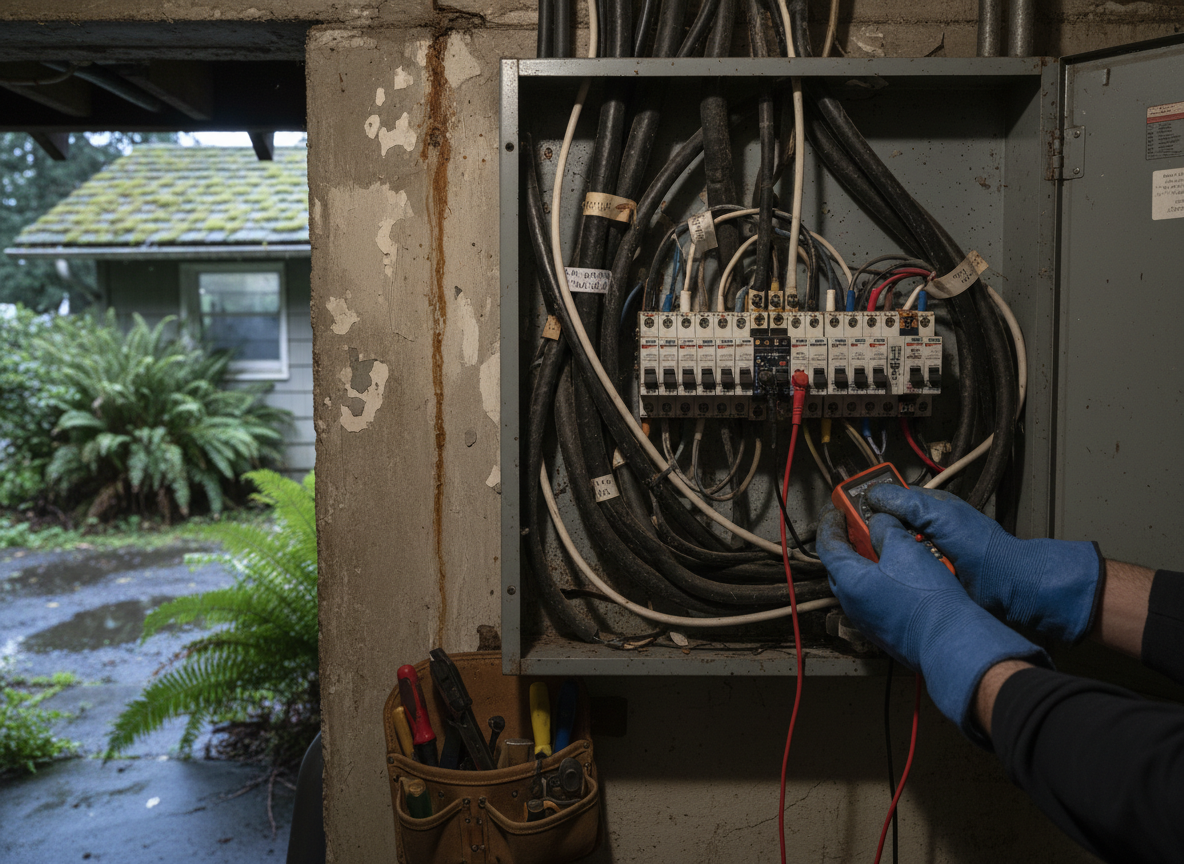
Why 100 Amp Service Cannot Handle a Heat Pump, an EV Charger and a Modern Kitchen
Run the actual load calculation and the answer is plain arithmetic: a heat pump, a Level 2 charger and an electric kitchen add up to more than 100 amps can carry. Here is the math, worked through.
2026-08-31
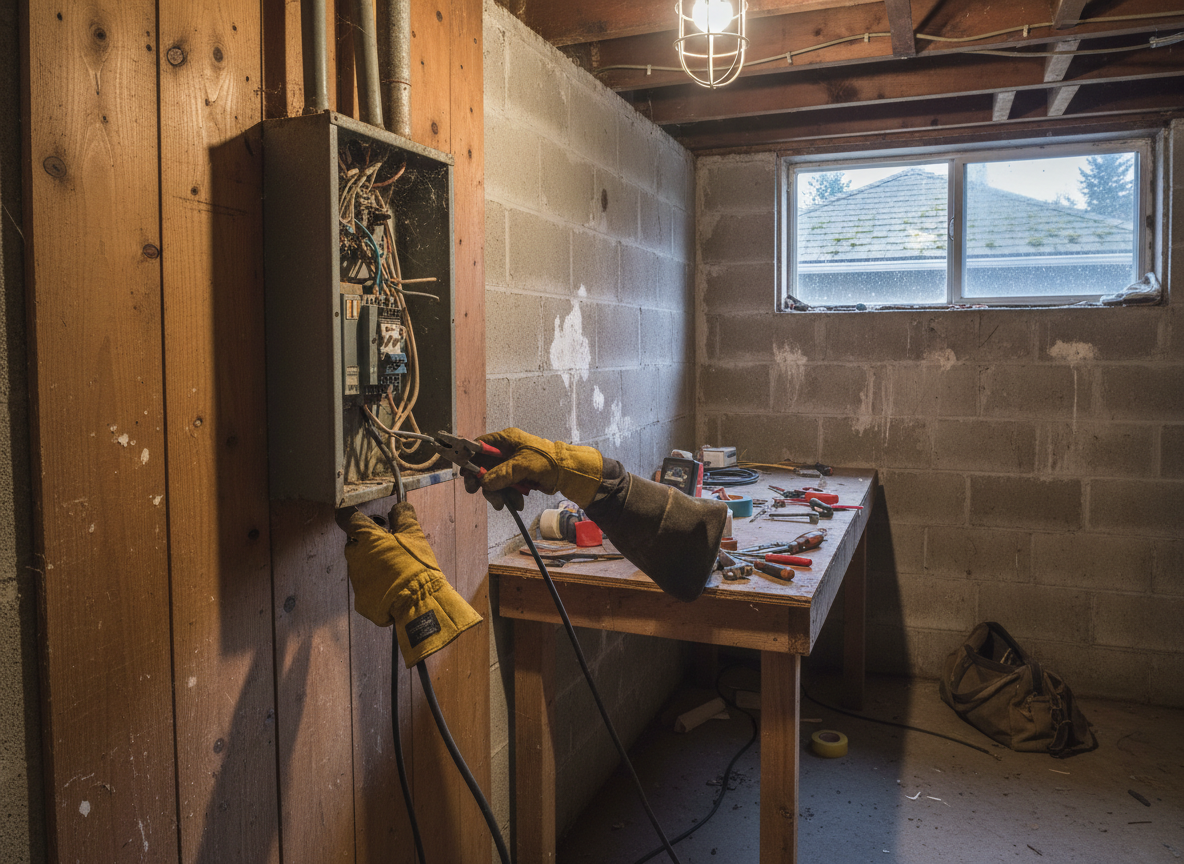
How Portland Permitting and Development Handles Residential Electrical Permits
Portland Permitting and Development issues electrical permits online or over the counter, and most jobs need one. Here is who can pull the permit, what work is covered, and how the inspection process actually runs.
2026-08-31
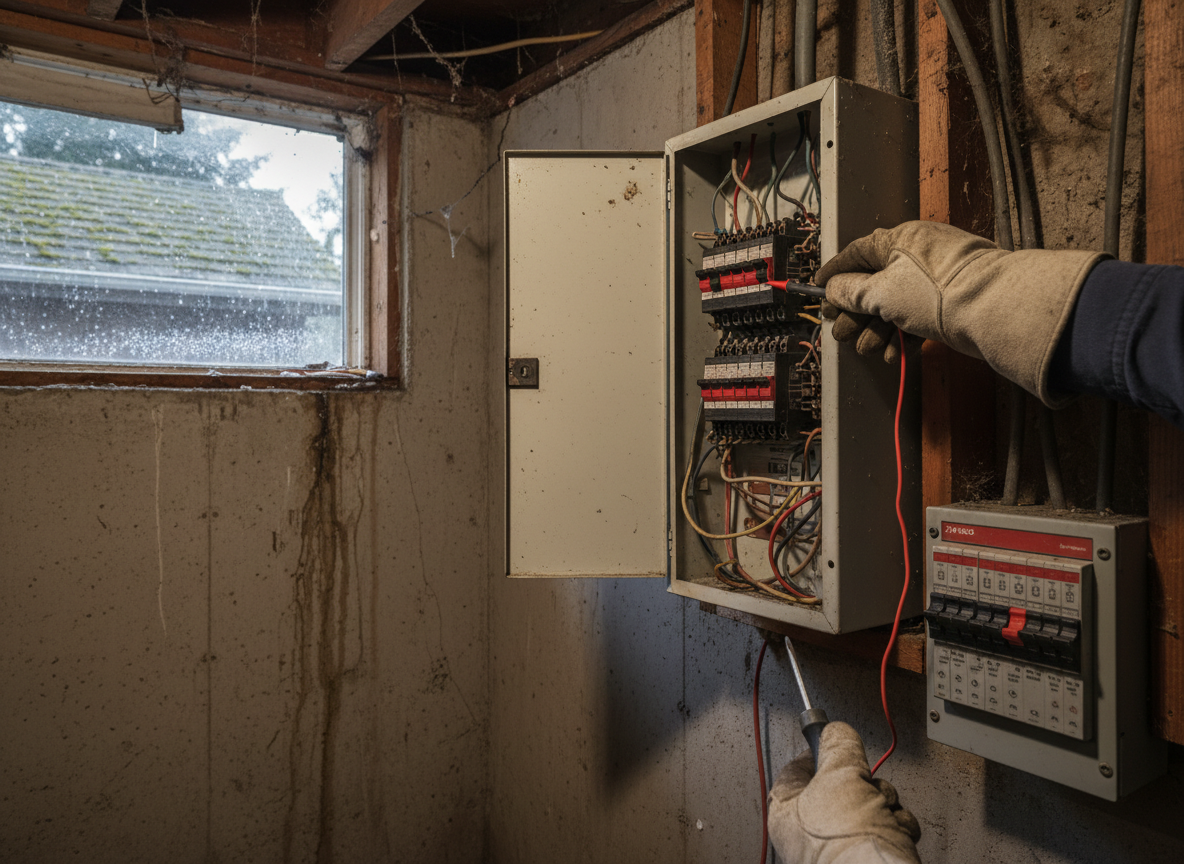
Federal Pacific and Zinsco Panels in Portland Homes and How to Identify One
Two panel brands from the mid century era, Federal Pacific Stab-Lok and Zinsco, have documented histories of breakers failing to trip. Identifying one takes about 2 minutes at the panel door.
2026-08-31
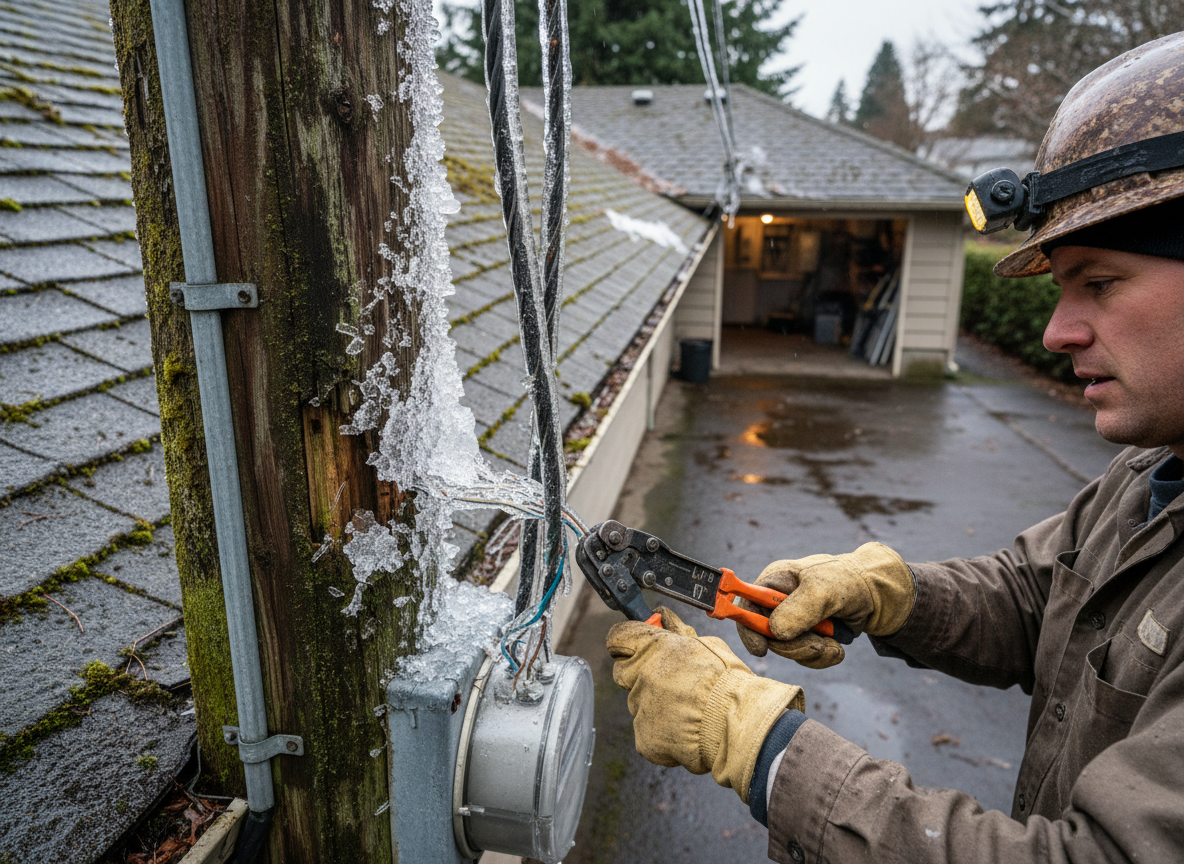
What Winter Windstorms and Ice Do to Service Masts and Overhead Drops
Every winter storm season leaves Portland houses with bent masts, torn drops and pulled-out attachment hardware. Understanding how the damage happens tells you what to check and who to call first.
2026-08-31
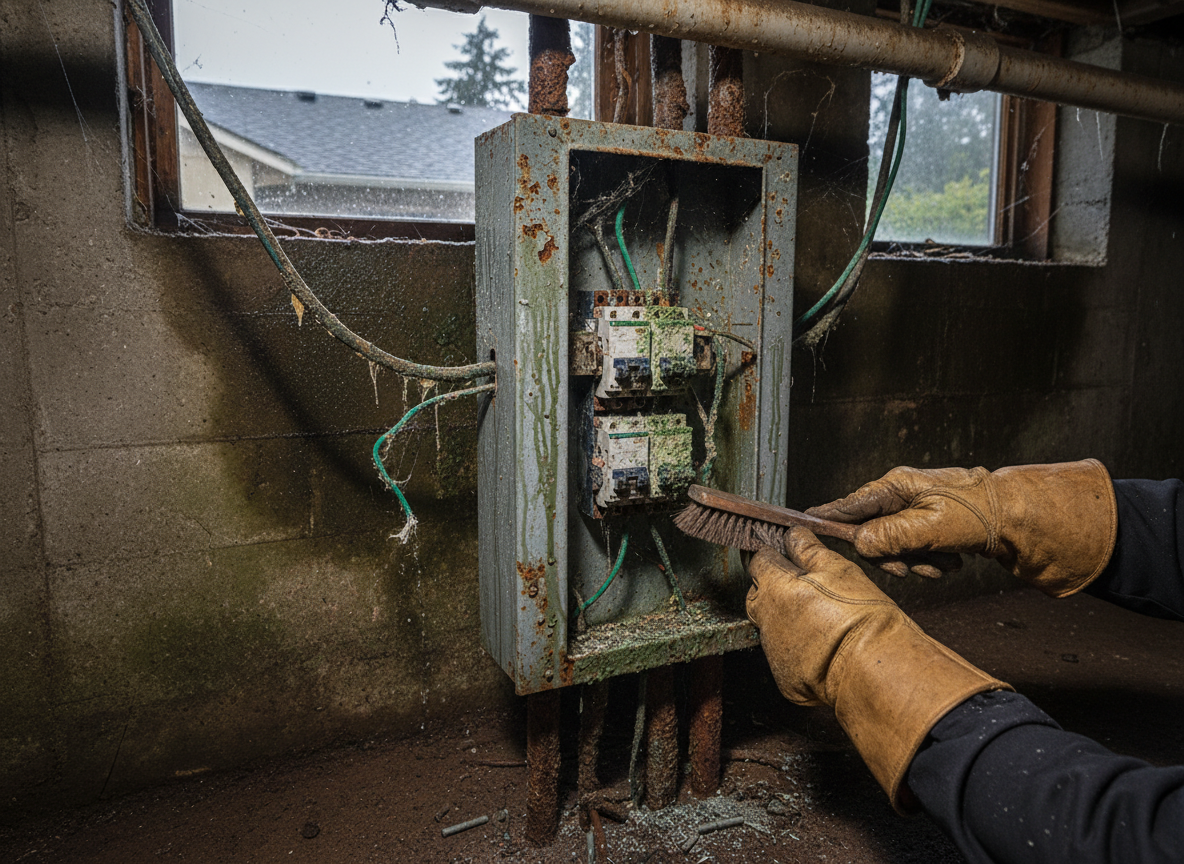
Moisture, Crawlspaces and Corroded Panels: A Wet Season Problem in Portland
From roughly October through May, moisture works on every electrical connection in a damp basement, crawlspace or outdoor meter base. Corrosion raises resistance, resistance makes heat, and heat is how electrical failures start.
2026-08-31
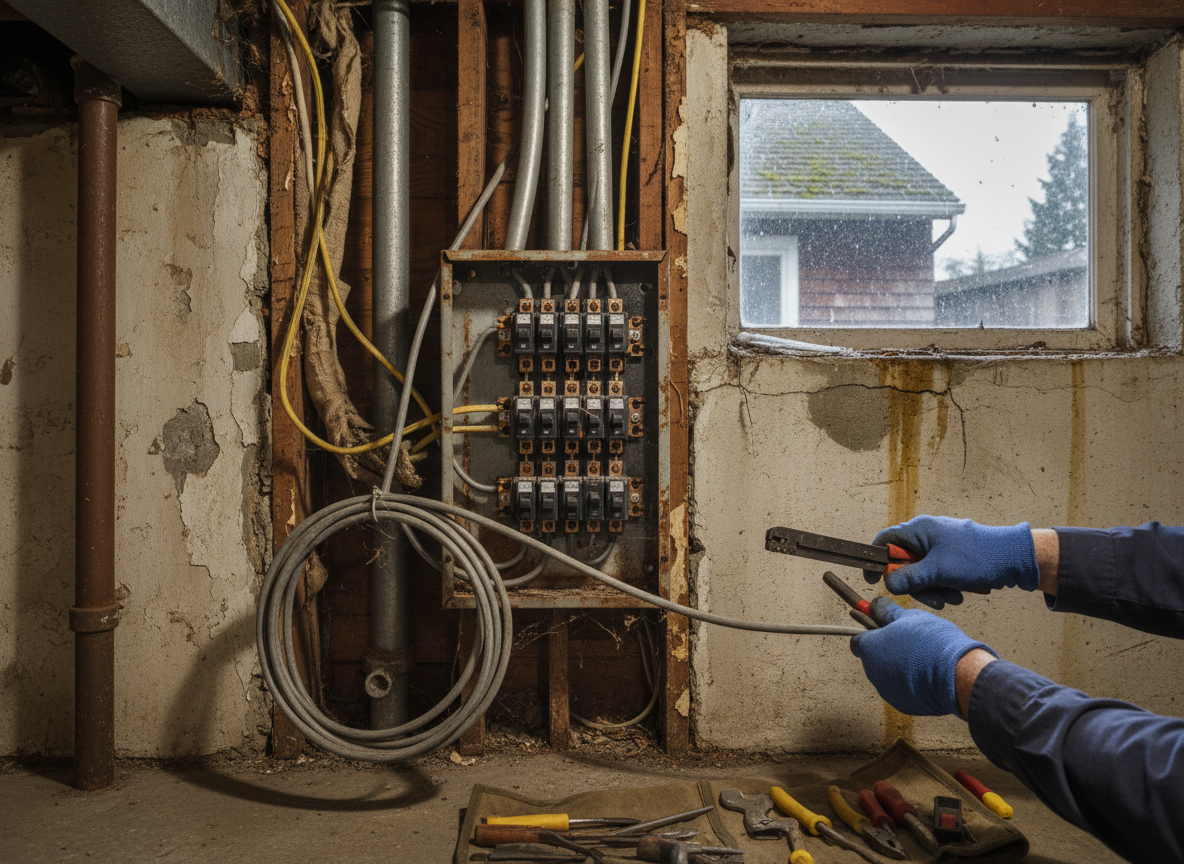
Aluminum Branch Wiring in 1960s and 1970s Portland Houses
Houses wired between about 1965 and 1973 often carry single strand aluminum branch wiring, which fails at its connection points rather than in the wire itself. The approved repairs are specific, and the common ones are not always the right ones.
2026-08-31
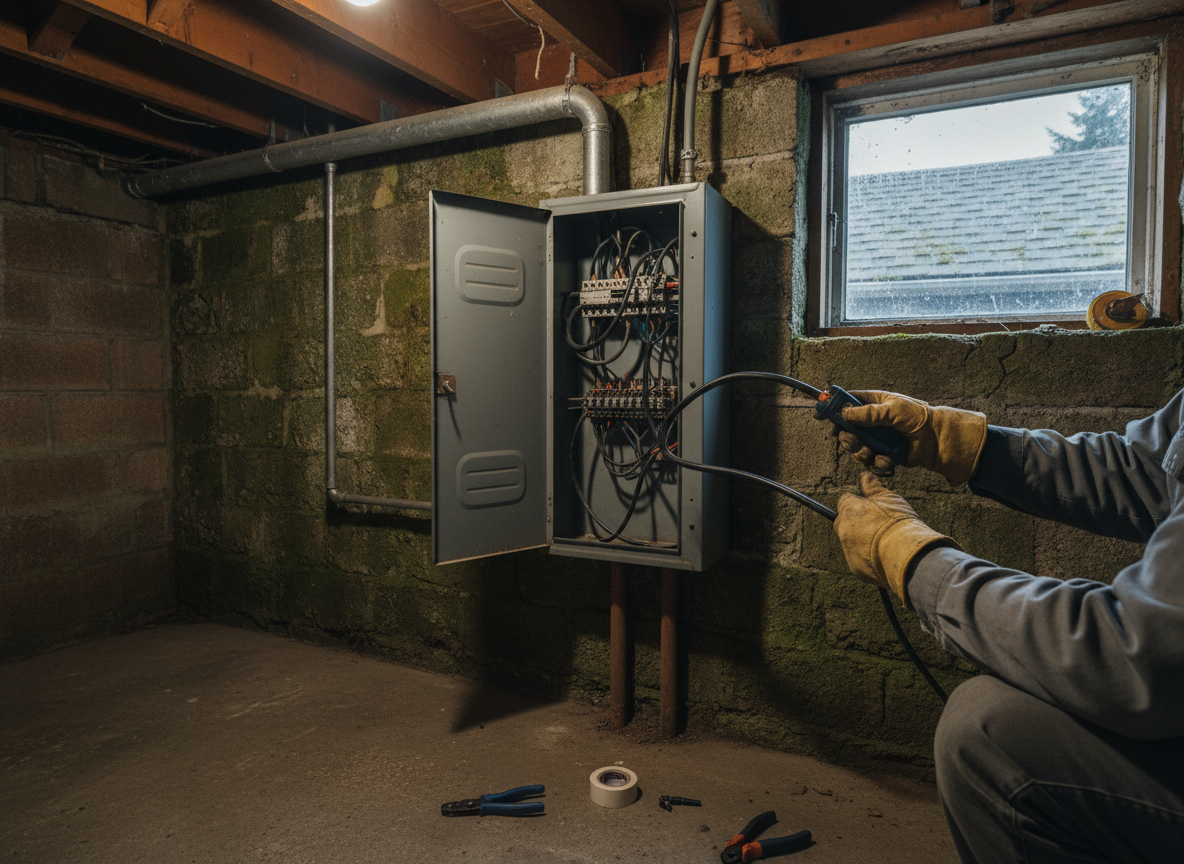
What Your Panel Needs Before a Level 2 EV Charger Can Be Installed
A Level 2 charger is one of the largest loads most homes will ever add. Here is what your panel has to prove before the wire goes in, and what to do if it can't.
2026-08-31
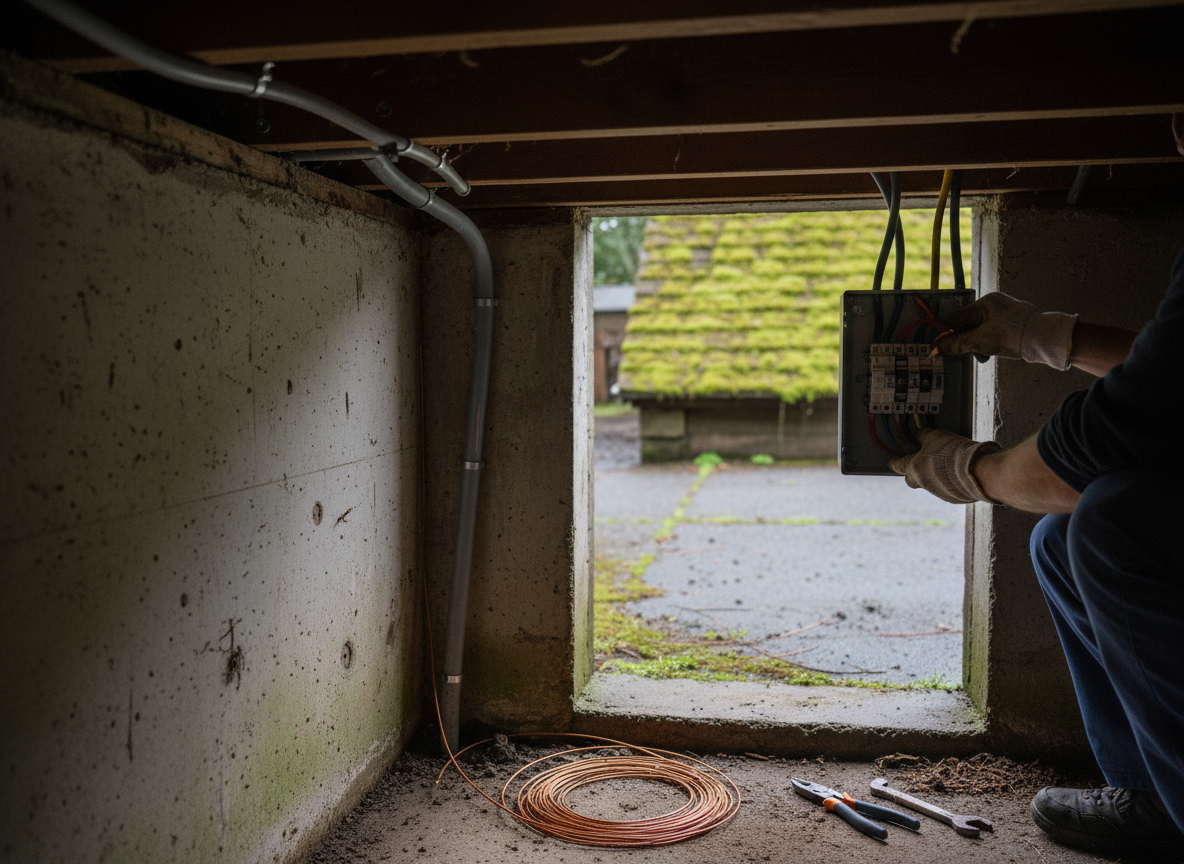
Wiring an ADU in Portland: Subpanels, Feeders and Detached Structure Rules
An ADU is legally a dwelling, and the code treats its electrical supply accordingly. Here is how feeders, subpanels, disconnects, and grounding actually work for a detached unit.
2026-08-31
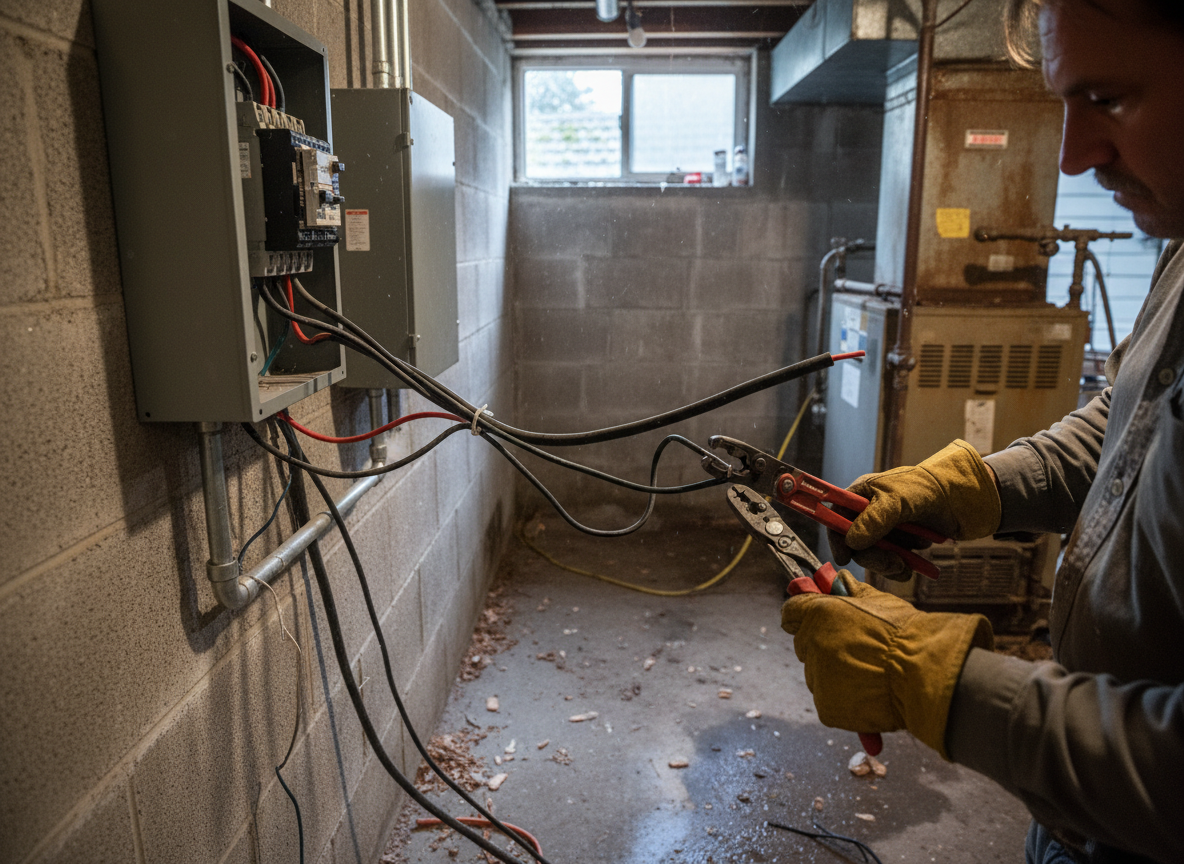
Converting From Gas to a Heat Pump: The Electrical Side Nobody Mentions
The HVAC quote covers the equipment. What it often skips is whether your panel can power it. Here is the electrical side of a gas to heat pump conversion, explained plainly.
2026-08-31
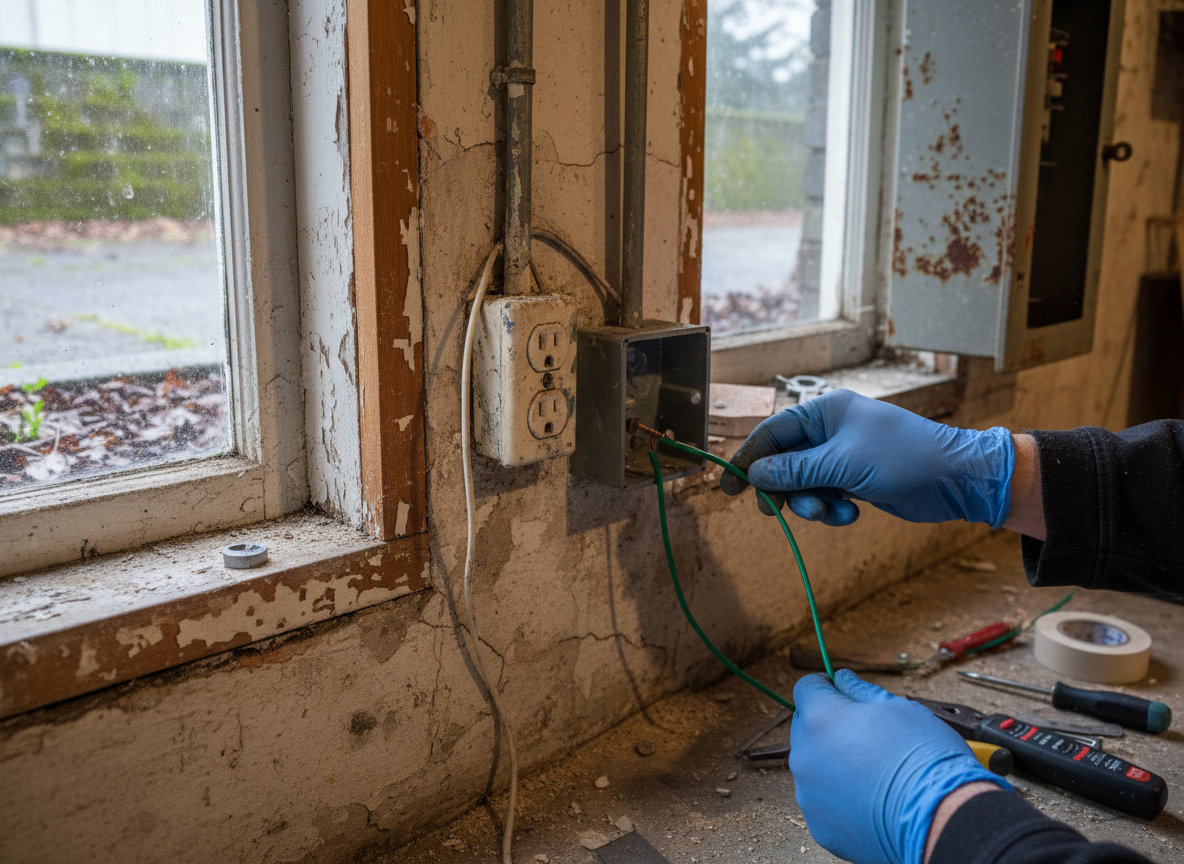
Ungrounded Two Prong Outlets in Old Portland Homes and the Correct Ways to Fix Them
Two prong outlets are original equipment in most pre 1960 Portland houses. There are exactly 3 legal ways to fix them, and 1 dangerous shortcut inspectors find constantly.
2026-08-31
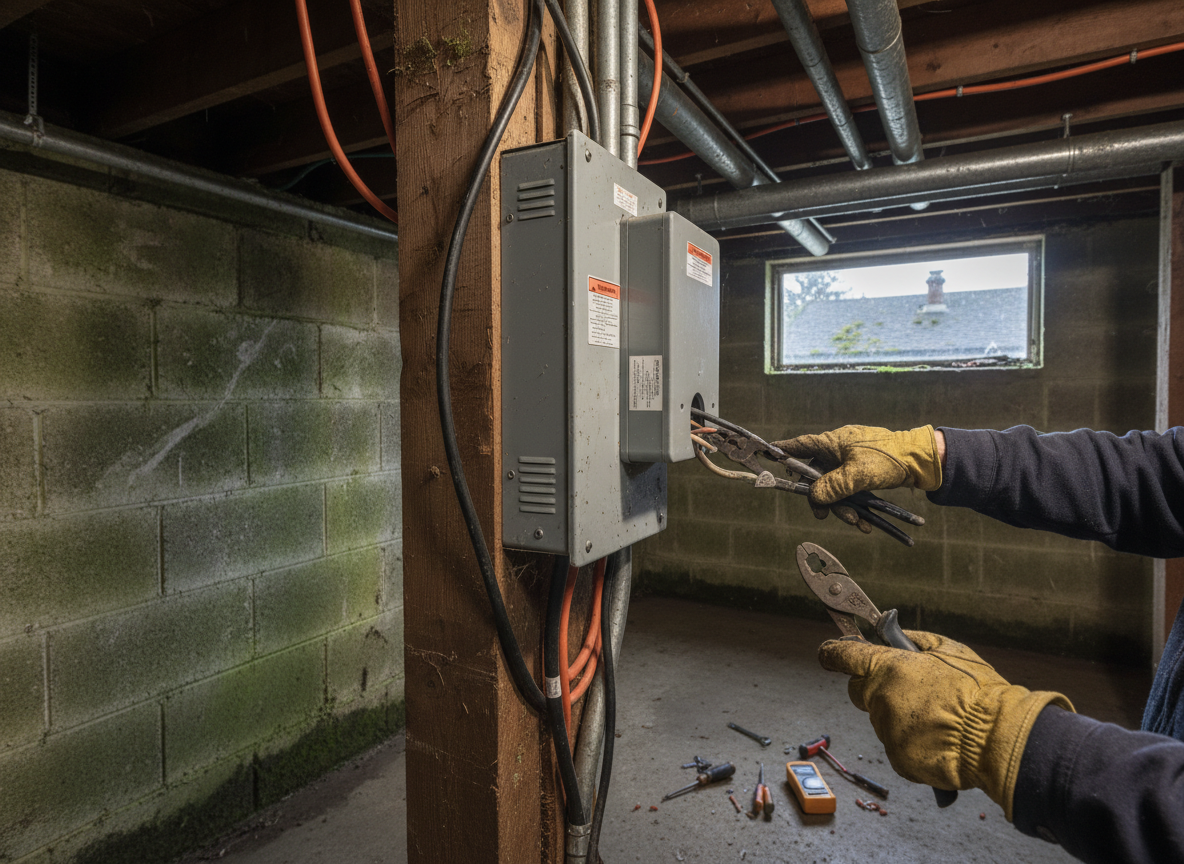
Whole Home Surge Protection and Why Grid Switching Damages Electronics
Most surge damage does not come from lightning. It comes from routine utility switching and the moment power returns after an outage. Here is how whole home protection actually works.
2026-08-31
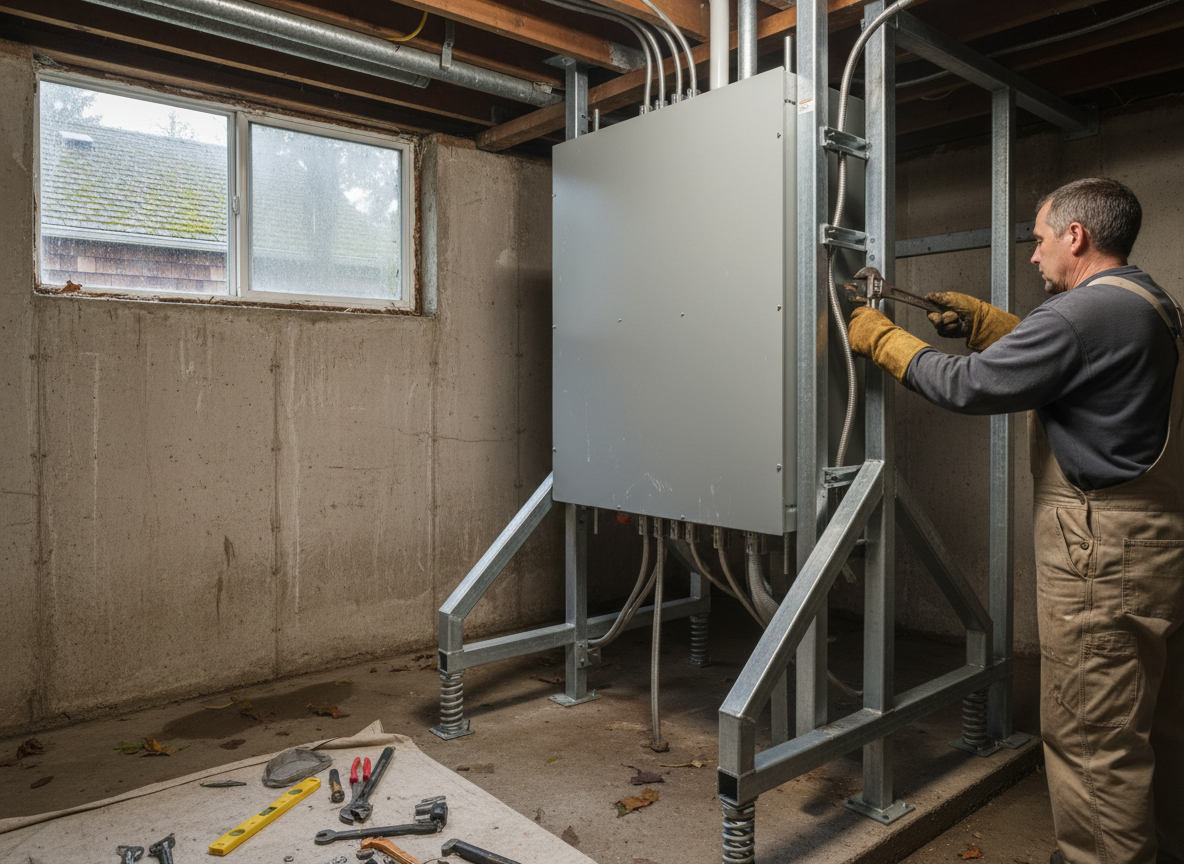
Seismic Mounting and Support for Electrical Equipment in the Pacific Northwest
A Cascadia quake will shake electrical equipment that was mounted for gravity, not for ground motion. Here is how seismic anchorage, bracing, and flexible connections keep systems intact.
2026-08-31
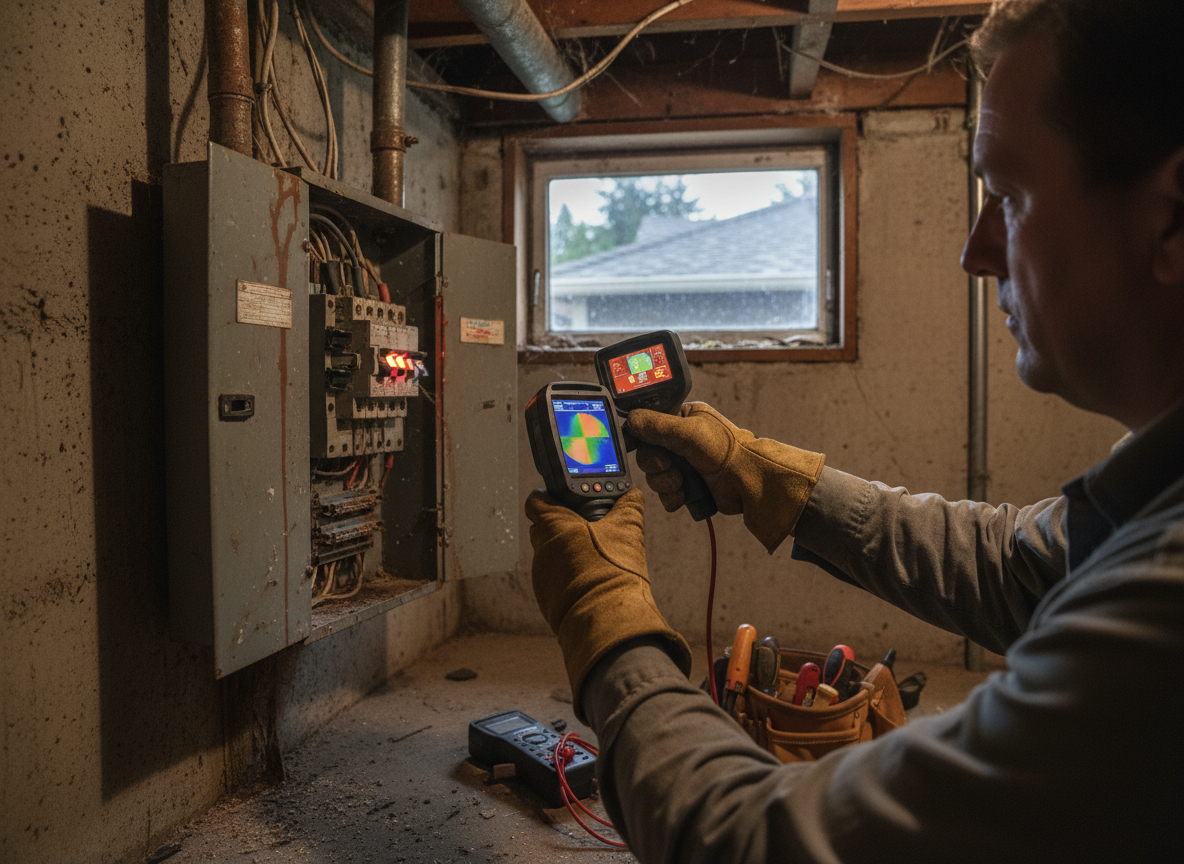
Why Breakers Trip During the First Real Heat Wave of the Summer
The first stretch of 95 degree days brings a wave of tripping breakers, and it is not a coincidence. Heat changes how breakers behave, and it exposes weak connections.