2026-08-31 · Trevor Lindquist
What Your Panel Needs Before a Level 2 EV Charger Can Be Installed
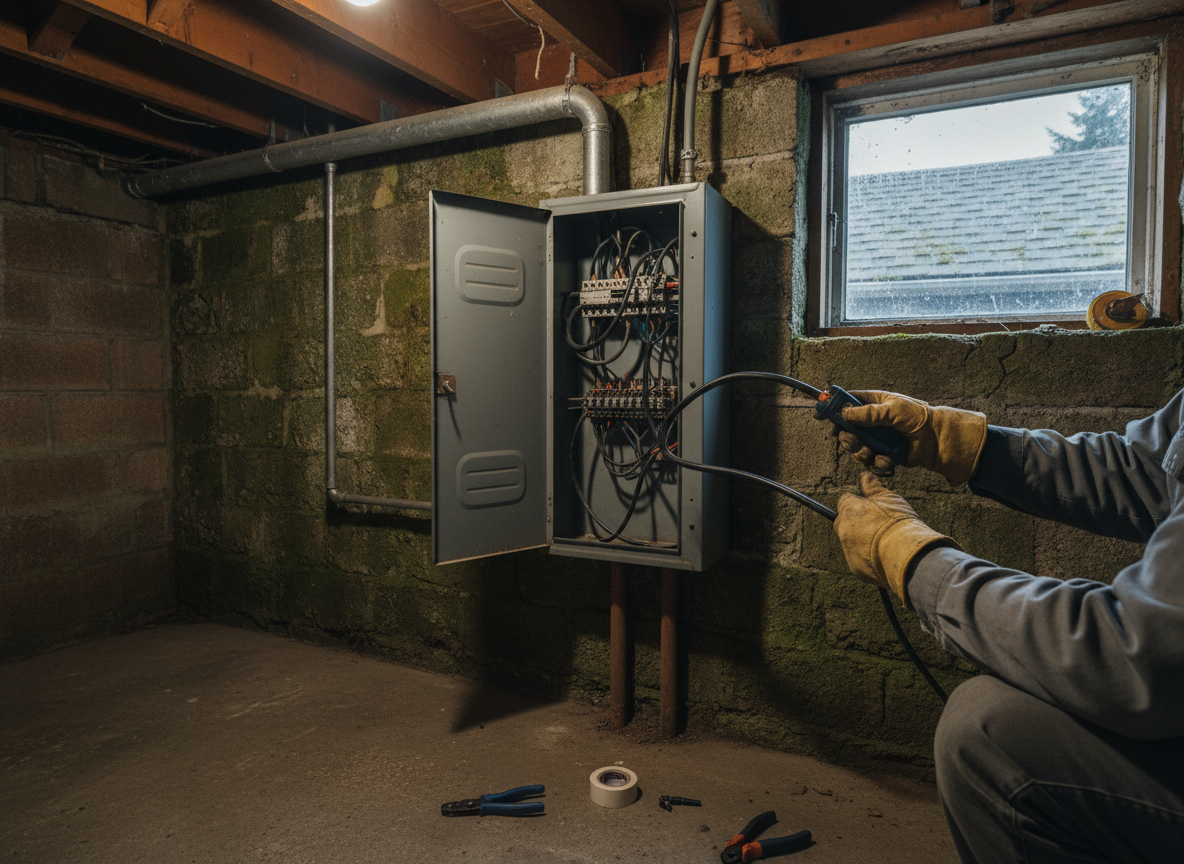
Before a Level 2 EV charger can be installed, your panel needs 3 things: enough spare capacity confirmed by a load calculation, physical space for a 2 pole breaker rated 40 to 60 amps, and equipment in sound condition. If any of those fail, the fix is a service upgrade, a panel replacement, or a load management device.
Why a Charger Is Different From Anything Else You Have Plugged In
Most household loads cycle. A refrigerator runs a few minutes an hour, an oven heats and coasts. A Level 2 charger pulls its full rated current, often 32 to 48 amps at 240 volts, continuously for hours. The NEC, adopted here as the Oregon Electrical Specialty Code, treats EV charging as a continuous load under Article 625, which means the branch circuit must be sized at 125 percent of the charger's output. A 48 amp charger needs a 60 amp circuit. That single circuit can rival the demand of an entire small house.
This is why the panel question matters so much in Portland specifically. A large share of the housing stock on the inner east side and north side still runs on 60 to 100 amp services installed when the biggest load in the house was an electric range. We regularly open panels from the 1950s that have never had a 240 volt circuit added beyond the range and dryer. Asking that service panel to absorb another 40 to 60 amps of continuous draw is not a paperwork formality. It is the whole job.
The Load Calculation Comes First, Not the Charger
The load calculation is a code required arithmetic exercise that adds up your square footage, appliances, heating and cooling, and existing 240 volt circuits, applies demand factors, and tells you how many amps your service actually needs to supply. No competent electrician quotes a charger install without one. If someone offers a firm price over the phone without asking what else is on your panel, be cautious.
A few realities from local jobs:
- A 100 amp service with gas heat, gas water heater, and gas range will often pass the calculation for a 40 amp charger circuit.
- The same 100 amp service with a heat pump added after the 2021 heat dome, an electric dryer, and an electric range usually fails it.
- Homes that converted from gas to electric appliances in the last few years frequently discover the charger is the load that finally forces the service upgrade everyone had been putting off.
The calculation also catches feeder and conductor issues. Some older services have undersized service entrance conductors feeding a panel that was upgraded at some point without touching the wire from the meter base. The panel label says 200 amps; the copper coming in says otherwise.
How to Tell What You Are Working With
You can gather most of the facts yourself before calling anyone:
- Open the panel door and read the main breaker rating. 100, 125, 150, or 200 amps.
- Count open breaker spaces. A 2 pole breaker needs 2 adjacent full size slots. A panel choked with tandem breakers is a sign it is already at its limit.
- Note the brand. Federal Pacific Stab-Lok and Zinsco panels, common in Portland's mid century neighborhoods, should not receive new circuits at all. Their breakers have documented failure to trip problems, and the right move is replacement before adding any large load.
- Look at where the panel lives. Portland panels sit in basements, garages, and utility rooms far more often than on exterior walls. The distance and routing from the panel to your parking spot drives conduit length, voltage drop considerations on long runs, and a real chunk of the price.
- Check for rust or water staining. With our wet season running roughly October through May, we find corroded busbars and damp meter bases often enough that it changes the scope of the work.
An electrician will add a check most homeowners miss: the condition of terminations and whether the grounding electrode conductor and bonding are up to current standards, since a permit and inspection will bring those into scope.
Your Options When the Panel Falls Short
If the load calculation fails or the panel is full, you have 3 legitimate paths:
- Service upgrade. Moving from 100 to 200 amps solves the problem permanently and helps resale. It involves the utility, either Portland General Electric or Pacific Power depending on where you live, plus a permit through Portland Permitting and Development and coordination for a power shutoff. Expect roughly $3,000 to $6,000 depending on mast condition, panel location, and whether the service mast and weatherhead need rebuilding.
- Load management device. An energy management system monitors your total household draw and throttles or pauses the charger when the service approaches capacity. NEC 625 explicitly allows this, and it can put a 48 amp capable charger on a 100 amp service legally. For a hardware cost of a few hundred dollars plus installation, many owners skip a $5,000 upgrade. The tradeoff is slower charging on heavy use evenings.
- A smaller circuit. A 20 or 30 amp Level 2 circuit still charges 3 to 5 times faster than a wall outlet and may pass the calculation when a 60 amp circuit will not. Most drivers who commute under 60 miles a day never notice the difference.
When It Becomes a Safety Issue
An overloaded service does not always trip the main breaker politely. Sustained loading near capacity heats conductors, lugs, and neutral bar connections, and heat cycling loosens terminations over time. The warning signs are a main breaker that trips on summer evenings when the charger, cooking, and cooling overlap, a warm panel cover, or a faint hot plastic smell near the panel. Any of those means stop charging and get the panel inspected. And on a Federal Pacific or Zinsco panel, the safe answer is replacement before charging at Level 2 at all, because the breaker protecting that continuous load may simply never open.
Every charger circuit here requires a permit and inspection through Portland Permitting and Development, which is your protection that the load math was actually done. Electrician Portland Oregon is a licensed and insured, owner operated contractor, and if you want the load calculation run before you buy a charger, or a quote for a Level 2 charger installation, we are glad to help.
Frequently Asked Questions
Do I need a 200 amp panel for a Level 2 charger?
No, many 100 amp services can support a Level 2 charger if a load calculation confirms spare capacity or a load management device is installed. Homes with gas heat, gas water heating, and a gas range often pass at 100 amps for a 40 amp circuit. All electric homes, or homes that added a heat pump, usually need the upgrade or an energy management system to stay within capacity.
What size breaker does a Level 2 charger need?
A Level 2 charger needs a 2 pole breaker sized at 125 percent of its output, typically 40 amps for a 32 amp charger, 50 amps for a 40 amp charger, and 60 amps for a 48 amp charger. Hardwired units above 40 amps of output cannot legally run on a plug and cord. The circuit size, not the charger brand, is what determines whether your panel can take the load.
Can I install an EV charger on a Federal Pacific or Zinsco panel?
No, a Federal Pacific Stab-Lok or Zinsco panel should be replaced before adding a Level 2 charger. Both brands have documented histories of breakers failing to trip under fault and overload conditions, and a charger is a continuous high current load, exactly the situation where a breaker must work. These panels are common in Portland homes from the 1950s through the 1970s, and replacement is the standard recommendation regardless of the charger project.