2026-08-31 · Trevor Lindquist
How Portland Permitting and Development Handles Residential Electrical Permits
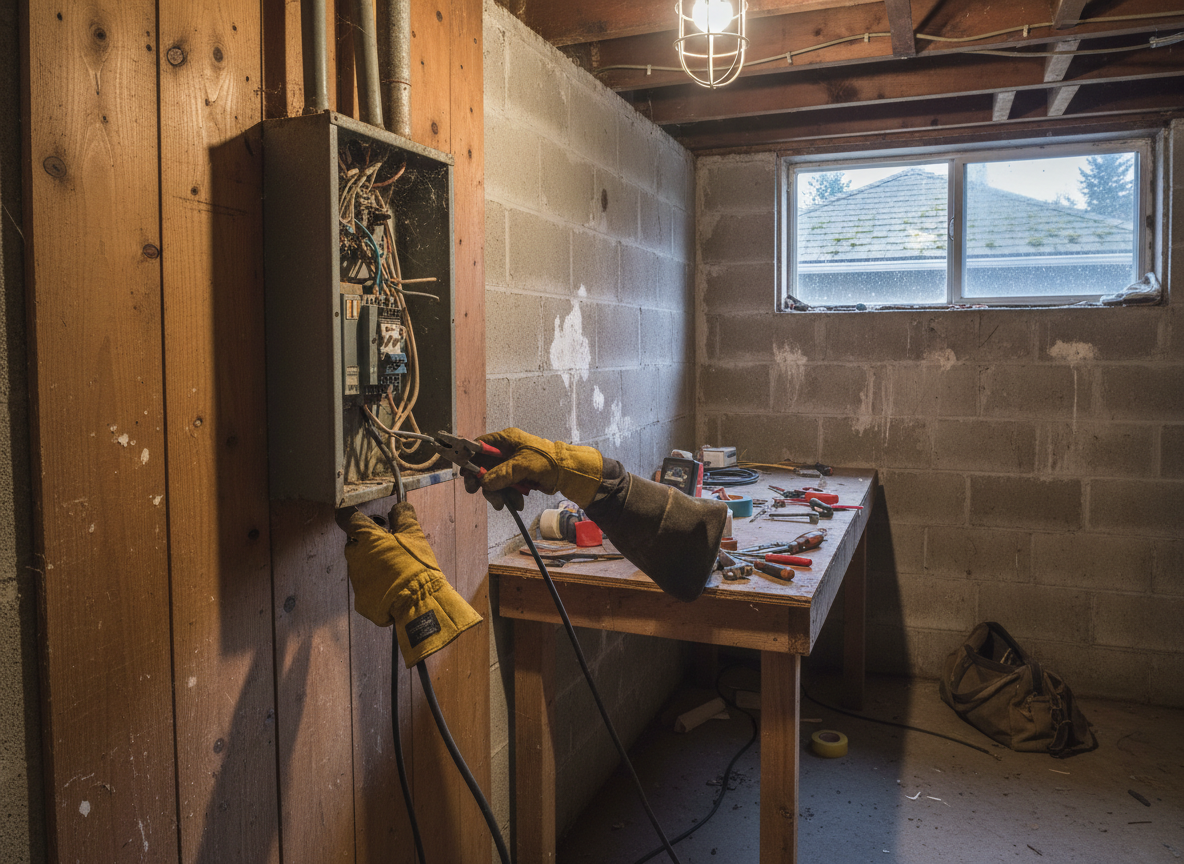
Portland Permitting and Development is the city bureau that issues residential electrical permits, and most electrical work beyond swapping a like-for-like fixture or device requires one. A licensed electrical contractor pulls the permit for hired work; homeowners may pull their own only for a house they live in and are not selling or renting.
Why the Permit System Exists and How It Works Underneath
The permit is the mechanism that attaches an independent inspection to electrical work. Oregon enforces the Oregon Electrical Specialty Code, which is the NEC as amended by the state, and the inspection verifies the work against that code. Without the permit, nobody with authority ever looks at the wiring before it disappears behind drywall.
The process runs in a loop: application, issuance, work, inspection, correction if needed, approval. For straightforward residential work, panel changes, new branch circuits, EV charger circuits, service upgrades, the permit is typically issued quickly through the city's online portal without plan review. Larger projects, a full rewire tied to a remodel, an ADU with its own feeder and subpanel, may involve more review before issuance.
Two categories of work deserve specific mention because they come up constantly in Portland right now:
- Service upgrades involve 3 parties, not 2. The city inspects your new meter base, service mast, conductors and panel, and the utility, PGE for most of the city or Pacific Power in parts of west and southwest Portland, will not reconnect until the city releases the approval to them. Scheduling the disconnect, the work, the inspection and the reconnect in the right order is most of the project management.
- EV chargers and heat pumps each need a permit for their new circuits, and the reviewer expects the load calculation to support the added amperage on the existing service.
How to Identify Permitted Versus Unpermitted Work
Portland's permit records are searchable online through the city's permit portal, and this is a tool more homeowners should use. Look up your address and you can see the electrical permits pulled over the decades, what they covered, and whether they received a final inspection. An issued permit with no final is a common finding, and it matters: the work was never approved, and it can surface during a sale.
Inside the house, the signs of unpermitted work are familiar to anyone who inspects Portland basements:
- NM cable stapled across the face of joists in a basement ceiling headed to a suspiciously new circuit.
- A double tap at a breaker, 2 conductors under 1 lug, where someone added a circuit without adding a breaker.
- Splices outside a junction box, or boxes buried behind drywall.
- A subpanel in a garage or ADU with no permit history at the address.
- 3 prong receptacles on circuits that a plug-in tester shows have an open ground, a giveaway that old ungrounded wiring got new devices without new wiring.
A field pattern specific to this housing stock: sellers discover during a transaction that the finished basement from 2 owners ago has no electrical permit on record. The buyer's inspector flags it, and resolving it late in a sale is far more stressful than permitting the work when it happens.
What the Inspection Process Looks Like
Most residential electrical jobs get 1 or 2 site visits:
- Rough in inspection, before insulation and drywall. The inspector checks cable routing and securing, box fill, nail plates, AFCI and GFCI circuit planning, and grounding. Nothing gets covered until this passes.
- Final inspection, when the work is complete and energized. Devices, cover plates, panel labeling, working clearance at the panel, and correct breaker sizing all get checked.
A panel change or service upgrade often runs as a single inspection since nothing is concealed. Corrections are normal and not a scandal: the inspector writes them, the electrician fixes them, and a reinspection closes it out.
Inspectors in Portland pay real attention to a few items worth knowing about in advance. Working clearance is one: code requires roughly a 30 inch wide, 36 inch deep clear space in front of a panel, and Portland's basement and utility room panel locations, shelving, water heaters and laundry equipment crowd that space constantly. Grounding electrode systems are another: an old service being upgraded will need its grounding electrode conductor and ground rods or other electrodes brought to current code, along with bonding of water and gas piping.
What to Do About It and When It Becomes a Safety Issue
If you are hiring the work out, the contractor pulls the permit. Treat any contractor who suggests skipping it as a warning sign, because the people asking to work uninspected are the people who benefit most from no inspection. If you are a homeowner doing your own wiring in your own residence, you can pull a homeowner permit, and your work gets inspected to the same standard.
For existing unpermitted work, the fix is usually straightforward: a permit is pulled to cover the correction of the work, deficiencies get repaired, and an inspection closes it. Nobody is interested in punishing you for a previous owner's basement project.
It becomes a safety issue rather than a paperwork issue when the unpermitted work shows the classic failure signs: warm cover plates, breakers that trip repeatedly, aluminum or undersized conductors on oversized breakers, or splices twisted together in free air. Those conditions should be evaluated promptly by a licensed electrician regardless of any permit question.
If you want help sorting out what your permit history shows, or getting past work corrected and signed off, we handle that regularly and are glad to walk you through it. Our permit corrections and code compliance work starts with a documented evaluation of what is actually behind the walls.
Frequently Asked Questions
Do I need a permit to replace an outlet or light fixture in Portland?
No, like-for-like replacement of a receptacle, switch or light fixture on an existing circuit generally does not require a permit. The line is crossed when you add or extend a circuit, add a new outlet location, replace a panel, or install a new 240 volt circuit for a dryer, range or EV charger. Those all require an electrical permit through Portland Permitting and Development and an inspection.
Can I pull my own electrical permit in Portland?
Yes, if you own and occupy the home and the property is not for sale or rent. Oregon allows homeowners to do their own electrical work on their own residence under a homeowner permit, with the same inspections a contractor's work gets. What you cannot do is pull a homeowner permit for a rental you own, a flip, or a friend's house, and unlicensed people cannot legally do electrical work for hire.
What happens if I buy a house with unpermitted electrical work?
Usually nothing automatic, but the work is unverified and any defects are now yours. The practical path is an evaluation by a licensed electrician, then a permit covering the corrections needed to bring the work to code, then inspection. Address it on your schedule rather than during a future sale, when a buyer's inspector finds it and every repair happens under deadline pressure.