2026-08-31 · Trevor Lindquist
Converting From Gas to a Heat Pump: The Electrical Side Nobody Mentions
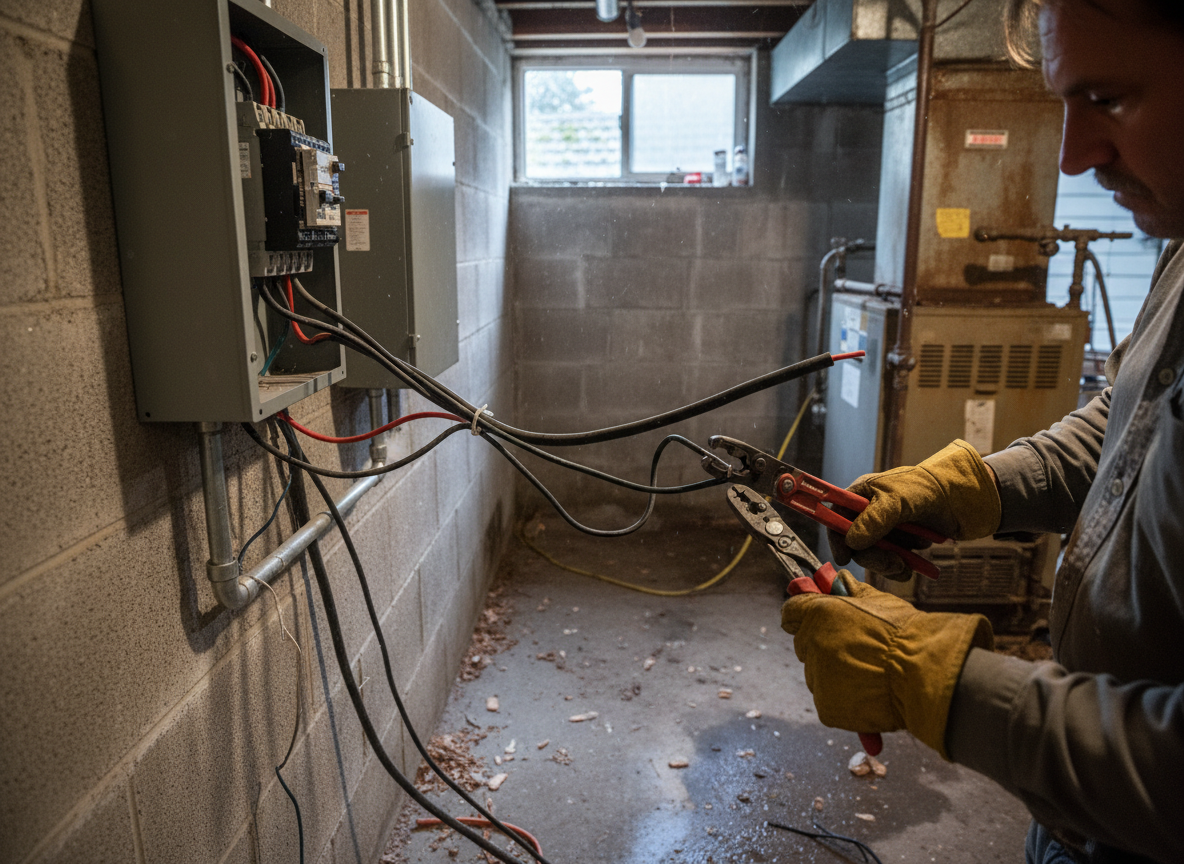
Converting from gas heat to a heat pump adds 1 or 2 substantial 240 volt circuits your panel never carried before: the outdoor unit and, in most ducted systems, electric backup heat strips that can draw more than the heat pump itself. A load calculation against your existing service determines whether the swap fits or a panel or service upgrade comes first.
The Mechanism: Where the New Load Actually Comes From
A gas furnace uses electricity only for a blower and controls, typically a single 15 amp circuit. A heat pump moves that entire heating job onto your electrical service. The compressor circuit for a typical residential unit runs 20 to 40 amps, sized from 2 numbers stamped on the equipment nameplate: MCA, minimum circuit ampacity, which sets the wire size, and MOCP, maximum overcurrent protection, which sets the breaker. Electricians size the circuit from the nameplate, not from tonnage or guesswork, and an inspector will check it.
The number that surprises people is the backup heat. Ducted heat pumps in this climate are usually installed with electric resistance heat strips in the air handler for defrost cycles and the coldest mornings. A 10 kW strip package draws about 42 amps at 240 volts. A 15 kW package draws over 60. The strips, not the heat pump, are frequently the largest single load in the whole house after conversion, and they are exactly the load that runs during a cold snap when everything else is running too. A quote that mentions the condenser circuit but not the strip circuit is missing half the electrical scope.
Ductless mini splits are gentler, often 15 to 25 amps with no strip heat, which is one reason they pencil out on older Portland services where a full ducted system would force an upgrade.
Why Portland Panels Get Caught Short
The 2021 heat dome pushed cooling into thousands of houses that never had it, and heat pumps are how most of it arrived. The problem is that the housing stock was electrified for a different era. Inner east side and north side homes built between 1900 and 1940 commonly still run 60 to 100 amp services, and plenty of them heated with gas precisely because the electrical service could not do the job. Take that 100 amp panel, add a 40 amp heat pump circuit and a 50 amp strip circuit, and the calculation fails before you touch the range or a future EV charger.
There is also a sequencing trap we see repeatedly: the HVAC contractor quotes the equipment, the customer signs, and the electrical question surfaces during installation week. At that point the options are a rushed service upgrade at premium urgency, coordination with Portland General Electric or Pacific Power for a service disconnect on short notice, or a compromise like undersized strips. Getting the load calculation done before the HVAC contract is signed costs a service call and saves the schedule.
How to Find Out Where You Stand
Before anyone quotes equipment, gather these facts:
- Read your main breaker rating: 100, 125, 150, or 200 amps.
- List your existing 240 volt loads: range, dryer, water heater, EV charger, shop equipment.
- Ask the HVAC contractor for the proposed equipment's nameplate MCA and MOCP and the strip heat kW before signing. They have these numbers; make them write them down.
- Count open full size breaker spaces. A ducted conversion typically needs 4 slots across 2 new 2 pole breakers.
- Note the panel brand and condition. A Federal Pacific Stab-Lok or Zinsco panel, common in the mid century neighborhoods, should be replaced before it takes on a heating load it will carry all winter. Rust at the bottom of a basement panel, routine in houses with damp crawlspaces during the October through May wet season, is a scope changer worth catching early.
Then have an electrician run the formal load calculation. Demand factors mean the answer is not simple addition; a house can carry more connected load than its service rating implies, but only the calculation, done per the Oregon Electrical Specialty Code, says by how much.
Options When the Numbers Do Not Fit, and the Safety Line
If the calculation fails, there are 4 realistic paths:
- Upgrade the service to 200 amps. The permanent fix, and the right call if an EV charger, induction range, or ADU is anywhere in your future. Roughly $3,000 to $6,000 depending on mast condition, panel location, and routing, since Portland panels usually sit in basements and garages rather than on exterior walls.
- Reduce the strip heat. Dropping from 15 kW to 10 kW, or using staged strips the thermostat brings on in steps, can pass a calculation that fails at full size. Modern cold climate heat pumps hold capacity deep into freezing temperatures, so oversized strips are often unnecessary here anyway.
- Load management. An energy management system can shed the strip or another large load when total demand approaches the service rating, a code recognized approach borrowed from EV charging practice.
- Go ductless. Multiple mini split heads spread smaller circuits and skip strip heat entirely.
The safety line is this: an overloaded service being pushed by winter heating shows up as a warm panel cover, a main breaker that trips on cold mornings, or flickering when the strips stage on. Repeated full load cycling loosens terminations, and a loose lug under a 60 amp heating load is how panels burn. If any of those symptoms appear after a conversion, stop and have the panel opened and inspected. Every conversion circuit also requires a permit and inspection through Portland Permitting and Development, which is the backstop confirming the math was done.
Electrician Portland Oregon is a licensed and insured, owner operated contractor that handles electrical panel and service upgrades, and we are glad to run the load calculation before you sign the HVAC contract.
Frequently Asked Questions
Do I need a panel upgrade to install a heat pump?
Not always, but a load calculation must be run first to know. A 200 amp service usually absorbs a heat pump with strip heat without trouble. A 100 amp service with an electric range, dryer, or water heater frequently fails once 10 kW or more of backup heat is added, and the fix is a service upgrade, smaller staged strips, or load management. The calculation costs little and settles the question before you commit.
What are MCA and MOCP on a heat pump nameplate?
MCA is minimum circuit ampacity, the number that sets the required wire size, and MOCP is maximum overcurrent protection, the largest breaker allowed on the circuit. Both come from the manufacturer and are printed on the outdoor unit's data plate. Electricians and inspectors size the circuit from these values rather than from the equipment's tonnage, so getting them from your HVAC contractor early lets the electrical work be quoted accurately.
Why do backup heat strips matter so much?
Because they are usually the largest new load in the conversion, bigger than the heat pump itself. A 10 kW strip package draws roughly 42 amps at 240 volts and a 15 kW package over 60, and strips run during cold snaps when the rest of the house is also working hard. Panels that handle the compressor circuit easily can fail the load calculation once strips are included, which is why a quote that ignores them is incomplete.