2026-08-31 · Trevor Lindquist
Ungrounded Two Prong Outlets in Old Portland Homes and the Correct Ways to Fix Them
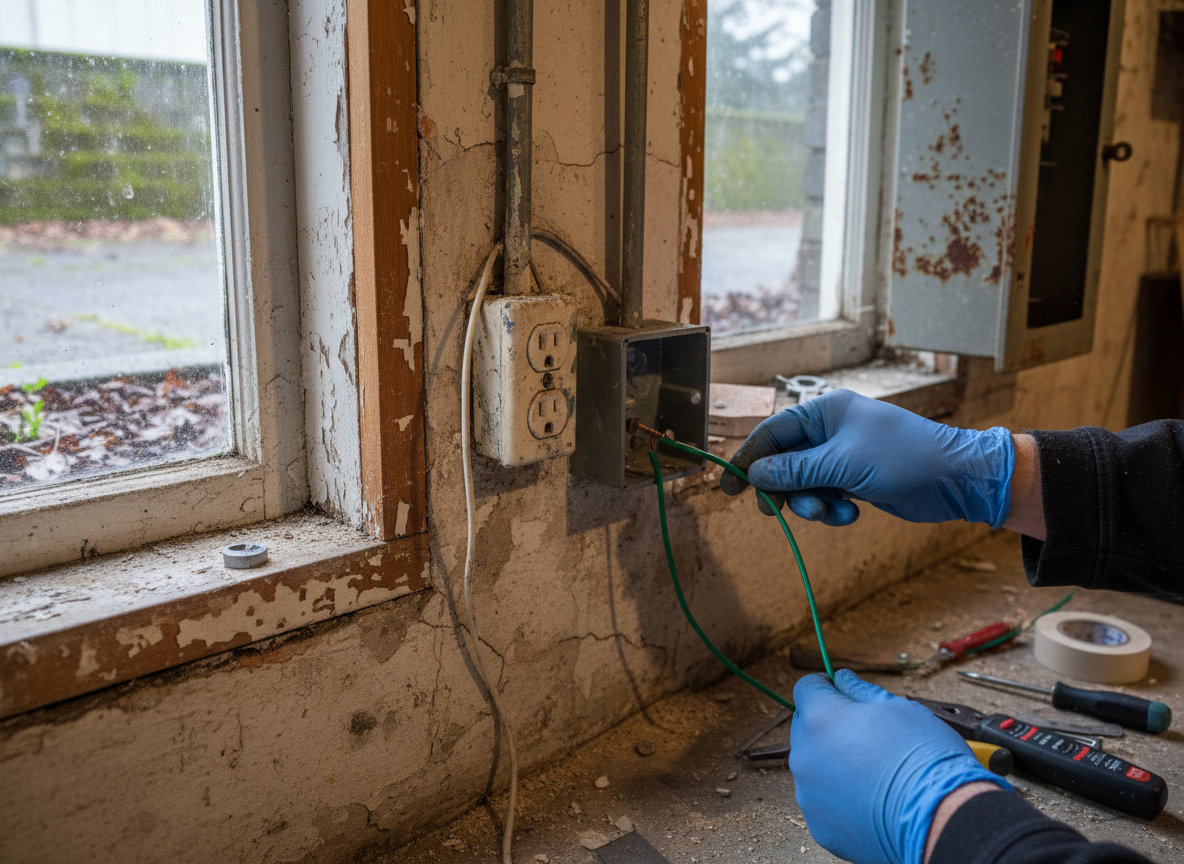
There are 3 correct fixes for ungrounded 2 prong outlets: rewire the circuit with a grounding conductor, protect the outlets with GFCI devices labeled "No Equipment Ground," or extend a new grounded circuit to the locations that need it. Swapping in 3 prong outlets without a ground, or jumping the ground screw to neutral, is illegal and dangerous.
Why Old Outlets Have No Ground and What That Actually Means
Houses on Portland's inner east side and north side, largely built between 1900 and 1940, were wired with knob and tube or early 2 wire cloth insulated cable. Both methods carry a hot and a neutral and nothing else. The equipment grounding conductor, the third wire that gives a fault current a fast path back to the panel, did not become standard until the 1960s.
That third wire does 2 jobs. First, if a hot conductor contacts a metal appliance case, the ground wire carries the fault current back and trips the breaker in a fraction of a second. Without it, the case simply sits there energized, waiting for someone to touch it while also touching a faucet, a radiator, or a damp basement floor. Second, grounding gives surge protective devices somewhere to dump excess voltage, which is why plug in surge strips do essentially nothing on an ungrounded outlet even though their light glows.
So a 2 prong outlet is not merely inconvenient. It means the circuit has no fault clearing path and no meaningful surge protection, in a housing stock where the insulation on those old conductors is often brittle cloth that crumbles when disturbed.
How to Identify What You Actually Have
Looks deceive here, and this is where Portland houses bite. Decades of ownership changes mean many old homes have 3 prong outlets on 2 wire circuits, upgraded cosmetically at some point without any actual grounding. Ways to sort it out:
- A $10 plug in circuit tester shows "open ground" instantly on an ungrounded 3 prong outlet. Test every outlet, not a sample; old houses were rewired room by room over decades and results vary within a single wall.
- A tester reading "correct" is not proof either. A bootleg ground, where someone jumpered the ground screw to the neutral terminal, fools basic testers completely. Detecting it takes a tester that measures ground impedance or an electrician opening the device.
- Look at the panel. Circuits leaving the service panel in 2 wire cloth cable or on ceramic knobs through the basement or attic have no ground, whatever the outlets in the room claim.
- Note the pattern of the house. A common local configuration is a 1920s house with a 1970s kitchen addition on grounded NM cable while the bedrooms remain knob and tube. Assume nothing floor to floor.
The bootleg ground deserves its own warning because we find them constantly in flipped houses. Tying ground to neutral at the outlet means the appliance case is connected to a current carrying conductor. If the neutral develops a loose or corroded connection anywhere upstream, which cloth wiring era terminations do, every "grounded" case on that circuit rises toward 120 volts. It converts a missing safety feature into an active hazard, and it is one of the first things a buyer's inspector looks for.
The 3 Legal Fixes, in Order of Preference
1. Rewire with a grounding conductor. Running new NM cable or EMT gives you a true ground, fresh insulation, and AFCI protection at the panel. It is the only fix that addresses the aging conductors themselves. Whole house rewires in Portland typically land between $8,000 and $25,000 depending on size, access, and finishes, but the work can be phased circuit by circuit. Unfinished basements and accessible attics, which many local houses have, make fishing walls far cheaper than plaster demolition. Permits and inspection through Portland Permitting and Development apply.
2. GFCI protection with the "No Equipment Ground" label. The code explicitly permits replacing a 2 prong outlet with a 3 prong one if the outlet is GFCI protected, either a GFCI device at that location or a standard outlet downstream of one, or a GFCI breaker. Every such outlet must carry the "GFCI Protected" and "No Equipment Ground" stickers that come in the box. A GFCI does not create a ground; it watches for current leaking off the circuit and opens in milliseconds, which protects people from shock very effectively. It does not protect electronics from surges, and equipment that requires a true ground still lacks one. This is the practical, code legal fix for a house you are not ready to rewire, often $60 to $120 per protected location.
3. Extend a grounded circuit. For the handful of spots that genuinely need a real ground, a home office, a workshop, a spot for sensitive gear, running 1 new grounded circuit from the panel to those locations costs a fraction of a rewire and solves the problem where it matters most.
A note on a tempting non fix: you cannot ground an outlet by running a wire to a nearby water pipe. Metallic water systems interrupted by plastic repairs, common after decades of Portland plumbing work, make an unreliable and non compliant grounding path.
When It Crosses Into a Safety Issue
Ungrounded outlets move from tolerable to urgent when any of these appear: tingling from an appliance case, a burning smell or warm outlet face, scorch marks around slots, or 2 prong outlets serving a basement, garage, kitchen, bathroom, or exterior location where damp conditions and grounded surfaces surround the user. Portland's wet season, roughly October through May, keeps basements and crawlspaces damp for months at a stretch, and a fault plus moisture plus no ground is the full recipe for electrocution. Discovering a bootleg ground anywhere in the house also justifies checking every outlet, because whoever installed 1 usually installed many.
Electrician Portland Oregon is a licensed and insured, owner operated contractor with deep experience rewiring older homes, and if you want your outlets tested and honest options laid out, from GFCI protection to a phased rewire, we can help.
Frequently Asked Questions
Is it legal to put 3 prong outlets on ungrounded wiring?
Yes, but only if each outlet is GFCI protected and labeled "GFCI Protected" and "No Equipment Ground," per the code adopted in Oregon. Simply swapping the device so 3 prong plugs fit, with no GFCI and no labels, is a violation that home inspectors flag on nearly every pre 1960 Portland house sale. The labels matter because they tell the next person the outlet protects against shock but offers no ground for surge protectors or equipment that requires one.
Do GFCI outlets work without a ground wire?
Yes, a GFCI works fully on a 2 wire circuit because it compares current leaving on the hot with current returning on the neutral and trips on any imbalance, no ground needed. That gives strong shock protection for people. What it cannot do is provide an equipment ground, so plug in surge protectors remain ineffective and the test button on the GFCI itself, not a plug in tester, is the correct way to verify it.
What is a bootleg ground and why is it dangerous?
A bootleg ground is a jumper between the ground screw and neutral terminal inside an outlet, installed to make a 2 wire circuit test as grounded. It puts appliance cases in contact with a current carrying conductor, so a single loose or corroded neutral splice upstream can energize every "grounded" metal case on the circuit at up to 120 volts. It also defeats basic outlet testers, which is exactly why sellers' quick fixes get caught by inspectors using better instruments.