2026-08-31 · Trevor Lindquist
Whole Home Surge Protection and Why Grid Switching Damages Electronics
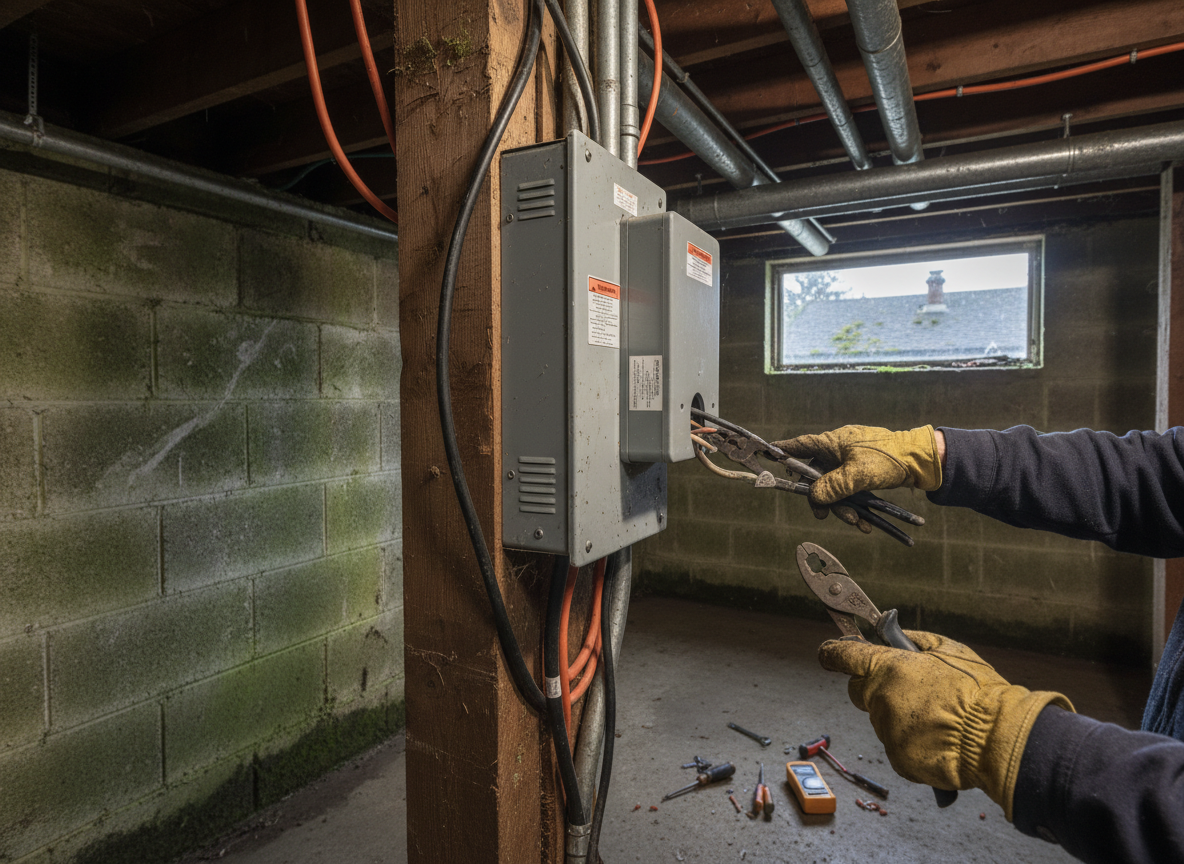
Whole home surge protection is a surge protective device, or SPD, installed at your panel or meter that clamps voltage spikes before they reach branch circuits. It matters because most surges come from routine grid switching and outage restoration, not lightning, and because the plug in strips most people rely on wear out silently and protect only 1 outlet.
Where Surges Actually Come From
A surge is a brief spike of voltage, microseconds long, riding on your 240 volt service. Lightning gets the headlines, but the everyday sources are mundane:
- Utility switching. When Portland General Electric or Pacific Power reroutes power, switches capacitor banks to manage voltage, or transfers load between circuits, the switching event itself launches transients down every service connected to that line. This is normal grid operation, happening year round, and each event is small but real.
- Outage restoration. This is the big one locally. When power returns after an outage, every motor, compressor, and power supply on the block starts simultaneously, and the reenergization step itself can arrive as a spike. Portland's winter windstorms and ice storms take limbs into lines from October through the spring, and multi day outages with several restoration attempts are when we get the calls about dead garage door openers, cooked furnace control boards, and failed heat pump compressor electronics. It is routinely the restoration, not the outage, that does the damage.
- Inside your own house. An estimated majority of transients are generated internally: the well pump, the AC compressor, the dryer motor, anything inductive that switches on and off. These small repeated hits do not kill electronics in 1 blow; they erode them.
Modern homes are more exposed than the same homes were 20 years ago. Heat pumps, EV chargers, induction ranges, and every appliance with a circuit board mean the average Portland house now contains far more surge sensitive equipment than it did before the post 2021 electrification wave.
The Mechanism: MOVs, Clamping, and Why Protection Wears Out
Nearly every residential SPD is built around metal oxide varistors, or MOVs. An MOV is a component that ignores normal voltage but becomes conductive above its threshold, diverting surge energy to ground and clamping what your equipment sees. This is also why grounding matters: an SPD can only divert energy if the grounding electrode system gives it somewhere to send it. On older Portland services with a corroded ground rod connection or a grounding electrode conductor clamped to interrupted metal water pipe, an otherwise good SPD is working with 1 hand tied.
The critical fact about MOVs: they are sacrificial. Every surge they absorb degrades them slightly, and a large event can use up most of a device's capacity at once. This is why a surge strip bought years ago may be nothing but an extension cord with a glowing light. Quality SPDs are rated in surge current capacity, tens of thousands of amps for panel mounted units versus a few thousand for strips, and carry status indicators that show when the MOVs are spent. Whole home units are built to absorb years of grid switching hits and still have headroom, but after a direct nearby strike or a violent restoration event, checking the indicator is part of the cleanup.
SPDs come in types. A Type 1 device installs on the line side of the main breaker, at or near the meter, and takes the first hit from outside events. A Type 2 device installs at the load center on the load side of the main and is the standard whole home unit; current code editions require an SPD on new and replaced residential services, so panel replacement projects here get one by default. Type 3 devices are the point of use strips at your desk.
How to Tell If You Need It, and Whether What You Have Still Works
Run down this list:
- Open your panel door. A whole home SPD looks like a small module mounted on or beside the panel with a short, straight pair of leads to a 2 pole breaker. No module means no whole home protection, which is the situation in most Portland homes with panels older than a few years.
- If a module exists, check its indicator lights. Green typically means active; red or dark means the MOVs are consumed and the unit is now decorative.
- Check your strips. Any surge strip without a working protection indicator, or one that has been through a known big event, should be replaced.
- Think about your history. If you lost electronics after a storm restoration, or your lights flicker when large appliances start, your service is seeing transients worth clamping.
- Have the grounding checked. This is the step generic advice skips. In houses from the 1900 to 1940 core of the city we regularly find grounding electrode conductors landed on water pipes that were cut and coupled with plastic decades ago, and wet season corrosion at exterior clamp connections. The SPD is only as good as the earth connection behind it.
What to Do About It and When It Becomes a Safety Issue
The effective approach is layered protection: a Type 2 SPD at the panel to knock every incoming spike down to a low residual level, plus Type 3 strips at sensitive equipment to trim what remains. Neither layer alone does the whole job. Installed cost for a quality Type 2 unit typically runs $300 to $700 depending on the device and available breaker space, a permit through Portland Permitting and Development applies, and homes with standby generators or transfer switches should have protection coordinated on both sources. If your panel is a Federal Pacific or Zinsco, the panel itself is the priority, and the SPD comes with its replacement.
The safety line: surge protection is mostly about property, but there are 2 exceptions. A failed or undersized strip that has absorbed repeated hits can overheat, which is why strips belong in open air, never under rugs or behind furniture, and never daisy chained. And repeated unexplained equipment damage can indicate a loose service neutral, a genuinely dangerous condition that mimics surge damage by swinging voltage between the legs of your service. If light bulbs brighten and dim in different rooms at the same time, that is not a surge problem, it is an emergency call.
Electrician Portland Oregon is a licensed and insured, owner operated contractor offering whole home surge protection installation, and we can add the device or verify your grounding in a single visit.
Frequently Asked Questions
Do surge protector strips wear out?
Yes, the MOVs inside every surge strip are sacrificial and degrade with each surge they absorb, so a strip can silently become a plain extension cord while its power light still glows. Only a dedicated protection indicator tells you the MOVs are still functional, and after any major event, a nearby strike or a rough outage restoration, strips without a working indicator should simply be replaced. Panel mounted SPDs carry far more capacity and clear status lights.
Is whole home surge protection worth it if I already use power strips?
Yes, because strips protect only what is plugged into them and modern homes have surge sensitive electronics everywhere else: the heat pump, EV charger, range, furnace board, and garage door opener. A Type 2 SPD at the panel clamps spikes before they reach any branch circuit, and the strips then serve as a second layer for sensitive gear. For a few hundred dollars installed, the panel unit protects equipment worth many times that.
What causes power surges besides lightning?
Routine utility grid switching, capacitor bank operation, and especially reenergization after outages, which in Portland cluster around the winter windstorm and ice storm season. Your own appliances add constant small transients every time a motor or compressor cycles. Lightning is actually a minor contributor here compared to restoration events, which is why homes that have never taken a strike still lose control boards and electronics after a stormy week with repeated outages.