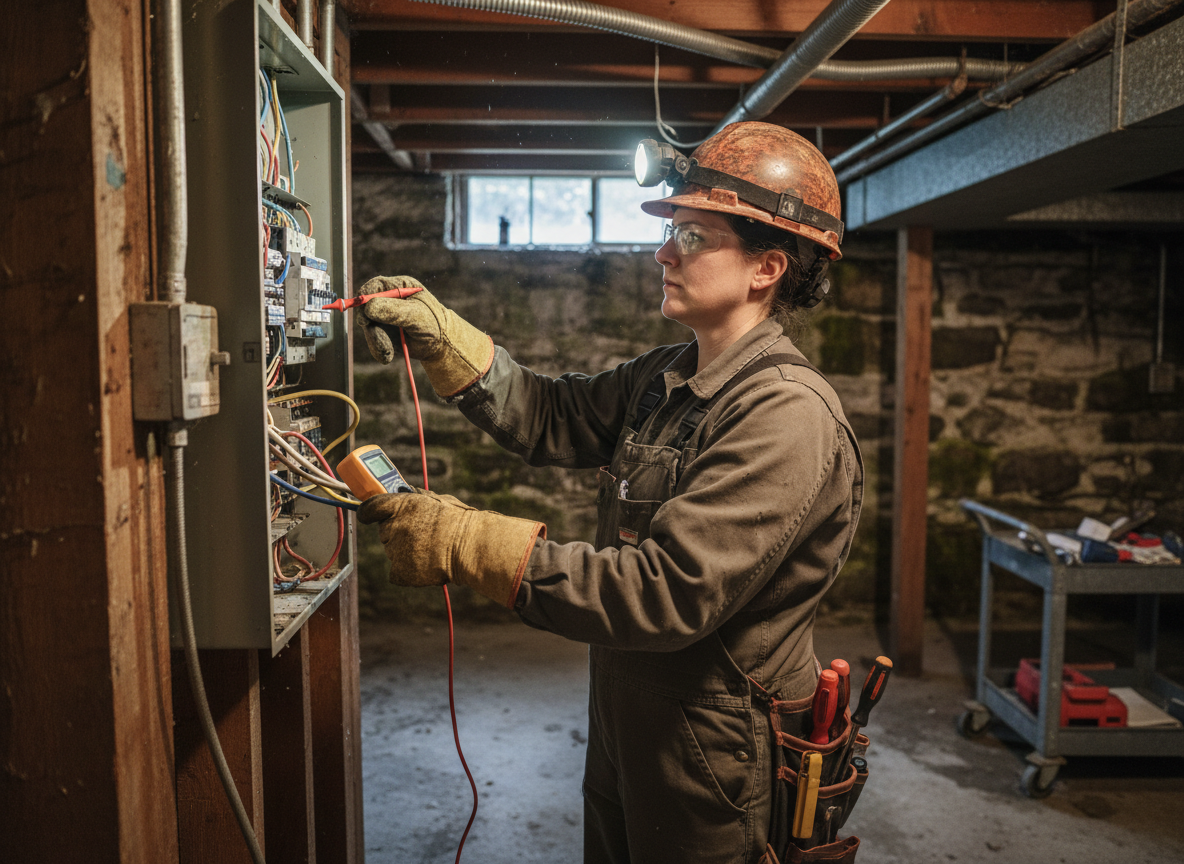
An electrical inspection is a point in time evaluation of a property's electrical system, ordered because something specific is happening: you are buying or selling a house, an insurer has asked for documentation, or a general home inspector flagged the panel and you need a licensed electrician's written opinion before a contingency deadline. Electrician Portland Oregon, a licensed, owner operated electrical contractor serving Portland, Oregon, inspects the service equipment, panel interior, branch circuit wiring, grounding and bonding, and a sample of devices, then delivers a report with photos, findings ranked by severity, and repair estimates. That last part matters in a transaction: a report that says "recommend further evaluation" is useless at the negotiating table, and ours states what it costs to fix.
Portland transactions surface the same short list of deal issues again and again. Insurers here regularly decline or surcharge homes with knob and tube wiring, Federal Pacific Stab-Lok panels, Zinsco panels, or 60 amp fuse services, all common in a housing stock where inner east side and north side homes date to 1900 through 1940. Buyers from states with four point inspection regimes often request the equivalent here, and we produce documentation an underwriter will accept. Wet season matters too: an October through May inspection is when we catch corrosion in the meter base, rust streaks inside a basement panel, and moisture in the crawlspace junction boxes that a summer walk-through misses. Buyers planning an EV charger or heat pump also need to know whether the existing service can take the load before they waive contingencies.
An inspection itself needs no permit, but the report has to be written by someone who knows what Portland Permitting and Development will require when the findings get fixed. Corrections like a panel replacement or service upgrade need permits, rough in and final inspections, and compliance with the Oregon Electrical Specialty Code, and we flag which findings trigger that so nobody is surprised mid escrow. We also run permit history on the address; unpermitted basement conversions and ADU wiring show up constantly in Portland listings, and open or missing permits can stall closing. Where sellers had work done without permits, we outline the path to legalize it, which is usually cheaper than the buyer's credit demand.
Experience shows where the surprises hide. A shiny new panel with a fresh sticker sometimes feeds the same brittle knob and tube in the walls, so we verify what the branch circuits actually are, not just what the panel suggests. Double taps and undersized tandem breakers cluster in homes that got DIY additions in the 1970s. Aluminum branch wiring from that era passes a visual check at the panel and fails at the device terminations, so we pull a sample of outlets. We check whether the grounding electrode conductor actually lands on a rod or just disappears into a wall. And on homes near closing, we prioritize the findings an insurer or lender will act on, so your negotiation focuses on what actually moves money.
Technician insight
The trap in Portland inspections is the shiny new panel with a fresh sticker that still feeds brittle knob and tube inside the walls, so we always verify what the branch circuits actually are. Aluminum wiring from the 1970s pulls the same trick: it looks fine at the panel and fails at the outlet terminations, which is why we pull a sample of devices.
A Contingency Week in Roseland
A buyer's agent called during a 10 day contingency period on a 1915 four square in the Piedmont area, after the general home inspector wrote "recommend evaluation by licensed electrician" next to the panel. We got on site within 2 days, pulled the dead front, and found a replaced panel feeding a mix of newer NM cable and active knob and tube on the second floor lighting circuits. The crawlspace held 2 open junction boxes with damp splices from the wet season. The written report landed the next business day with photos, severity rankings, and priced repair ranges for phased knob and tube replacement and the junction box corrections. The buyer negotiated a credit against those numbers instead of walking, and the insurer bound coverage with a remediation timeline. The deal closed on schedule.
Electrical Inspection Services We Offer
✓Pre Purchase Electrical Inspection
A buyer side inspection during the contingency period with a written report and repair pricing you can take into negotiation.
✓Pre Listing Electrical Inspection
A seller side inspection before the home hits the market, so known issues are fixed or disclosed on your terms.
✓Insurance Required Electrical Inspection
Documentation for underwriters on panel type, wiring methods, and service condition, including four point style requests.
✓Panel and Service Evaluation
A focused inspection of the service panel, main breaker, busbar, and service entrance when that is all a lender or insurer asked about.
✓Knob and Tube Assessment
Locating and mapping active knob and tube, assessing its condition, and pricing full or phased replacement for a transaction.
✓Permit History Review
Pulling the address's permit record and reconciling it against visible work to catch unpermitted wiring before it stalls closing.
✓Home Inspector Referral Follow Up
A licensed electrician's evaluation of items a general home inspector flagged, converting "recommend evaluation" into findings and numbers.
✓Capacity Check for Buyer Plans
A load calculation against the existing service so a buyer knows if the EV charger or heat pump they plan will require a service upgrade.
How it works
- 1
Scope and deadline
We confirm what event is driving the inspection, what the insurer or contract requires, and your contingency or closing date, then schedule to beat it.
- 2
On site inspection
We open the panel dead front, inspect service equipment, grounding, and accessible wiring in the basement, attic, and crawlspace, and test a sample of devices and GFCI protection.
- 3
Written report
You get a photo documented report within 1 to 2 business days, findings ranked by severity, with repair cost ranges attached to each item.
- 4
Follow through
We answer questions from your agent, lender, or insurer, and if you want corrections made, we permit and perform them under Portland Permitting and Development.
Pricing
Scope and property size move the price. A focused panel and service evaluation for an insurer is the low end, commonly $150 to $300. A full pre purchase inspection with written report on a typical Portland house usually runs $300 to $600, more for large homes, detached ADUs, or properties with multiple panels and subpanels. Crawlspace access, sampled device removal for aluminum wiring checks, and permit history research add time. Rush delivery inside a tight contingency window can carry a premium. If we later perform the corrections, we credit some or all of the inspection fee toward the repair work. These are ranges, not quotes.