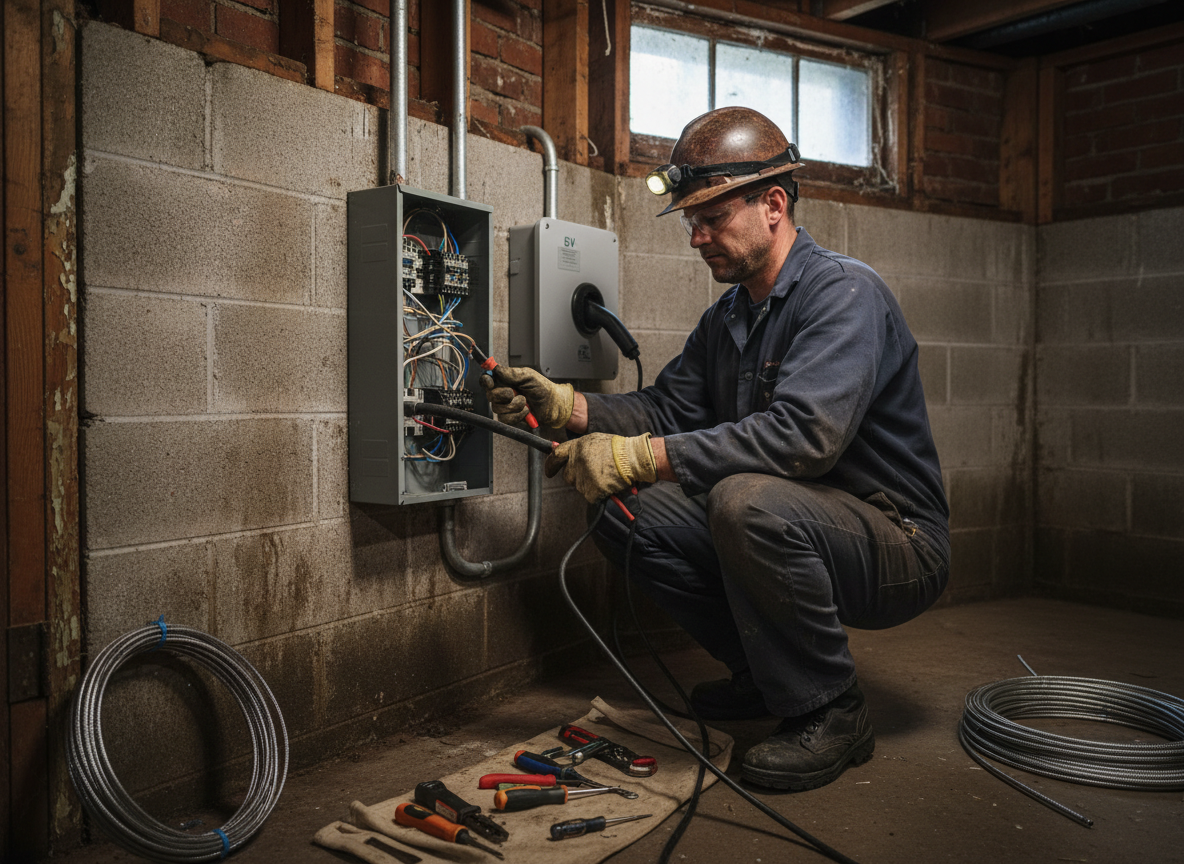
EV charger installation means running a dedicated 240 volt circuit from your panel to a Level 2 charging station, either hardwired or on a heavy duty outlet, so your vehicle charges overnight instead of over days. Electrician Portland Oregon is a licensed, owner operated electrical contractor serving Portland, Oregon since 2011. The job starts with a load calculation, not with mounting hardware: a Level 2 charger draws 32 to 48 amps continuously, and under the Oregon Electrical Specialty Code a continuous load is sized at 125 percent, so a 48 amp charger needs a 60 amp circuit. The calculation tells us whether your panel can carry that, and it decides everything downstream.
Portland's EV adoption runs high, and the housing stock pushes back. Inner east side and north side homes from 1900 to 1940 often still have 60 to 100 amp services, and many of them recently absorbed a heat pump after the 2021 heat dome. A large share of the charger installs we quote need a service or panel upgrade first, or a load management device that throttles charging when the rest of the house is drawing hard. Panels here sit in basements and garages, so the circuit often has to cross the house to reach the driveway side, and detached garages need a buried conduit run or an existing feeder with capacity to spare. Charging hardware mounted outdoors gets specified for the October through May wet season, with in use rated covers on any outlet.
An EV charger circuit requires an electrical permit from Portland Permitting and Development and a final inspection, and trenched conduit to a detached garage also gets an inspection before backfill. The Oregon Electrical Specialty Code sets the rules that matter: GFCI protection for charger outlets, the 125 percent continuous load sizing, conductor ampacity checked against voltage drop on long runs, and a properly rated disconnect where required. Rebates are worth checking before you buy hardware, since PGE and Pacific Power territories run separate programs and some require a networked charger or a specific installation date to qualify. We install to the standard the rebate paperwork asks for, and the closed permit is the document those programs want to see.
The failure modes are predictable once you have installed a few hundred of these. The 14-50 outlet on a 50 amp breaker is the most common DIY shortcut, and cheap versions of that outlet melt under continuous charging load, which is why we hardwire chargers or install commercial grade outlets only. Long runs to detached garages fail on voltage drop math, not just ampacity, so a 60 foot run may need a conductor size larger than the breaker suggests. Chargers set to draw more than their circuit allows trip breakers nightly until the settings are corrected during commissioning. And on marginal 100 amp services we would rather install a load management system than watch a main breaker trip at 2 am in January when the heat pump and the charger peak together.
Technician insight
The classic Portland shortcut is a cheap 14-50 outlet on a 50 amp breaker, and budget versions of that outlet melt under continuous charging load, which is why we hardwire or use commercial grade outlets only. The quieter trap is the detached garage run, where voltage drop math on a 60 foot run can demand a conductor size larger than the breaker alone would suggest.
Charger to a Detached Garage in Montavilla
A homeowner in Montavilla wanted a 48 amp Level 2 charger in a detached garage at the back of a deep lot, roughly 70 feet from the basement panel. The load calculation showed a healthy 100 amp service, but a heat pump installed the previous year left no room for a 60 amp continuous load, so we quoted 3 paths and the owner chose a load management device over a full service upgrade. We trenched conduit along the fence line, upsized the conductors for voltage drop over the distance, and called for the trench inspection before backfill. The charger was hardwired, set to the circuit's rating during commissioning, and verified charging at full rate with the owner's vehicle. Portland Permitting and Development passed the final the same week, and the closed permit went into the PGE rebate application. The main breaker has not tripped once, even on cold January nights when the heat pump runs hard.
EV Charger Installation Services We Offer
✓Level 2 Home Charger Installation
A dedicated 240 volt circuit and wall mounted charging station, hardwired or on a commercial grade outlet, commissioned and permitted.
✓EV Ready Outlet Installation
A 240 volt circuit and heavy duty outlet for owners whose vehicle came with a plug in charging cord.
✓Detached Garage and Driveway Charging
Trenched conduit runs and feeder work to reach detached garages and parking pads, with voltage drop calculated for the distance.
✓Load Management System Installation
Devices that pause or throttle charging when the panel nears capacity, letting a healthy 100 amp service support a charger without a full upgrade.
✓Panel Upgrade with EV Charger
A combined 200 amp service upgrade and charger install under coordinated permits when the load calculation says the panel is out of room.
✓Charger Replacement and Repair
Diagnosing and swapping failed chargers, melted outlets and tripping circuits from prior installs.
✓Apartment and Condo EV Charging
Charging solutions for shared panels and metered spaces, scoped with the building owner or HOA.
✓Workplace and Fleet Charging
Multi charger commercial installations with load sharing across a site's available capacity.
How it works
- 1
Load Calculation And Site Check
We measure your panel's spare capacity, walk the route from panel to parking spot, and confirm charger sizing, load management or an upgrade before you buy hardware.
- 2
Quote And Permit
You get a written price for the exact route and hardware, and we file the electrical permit with Portland Permitting and Development.
- 3
Installation
We run the circuit, mount and hardwire the charger or install a commercial grade outlet, torque and label everything, and set the charger's amperage to match the circuit.
- 4
Inspection And Commissioning
The city performs the final inspection, we verify charging at full rate with your vehicle, and we hand over the paperwork rebate programs ask for.
Pricing
Straightforward Level 2 installations with the charger near the panel commonly run $800 to $2,000 in labor and materials, before charger hardware. The price climbs with distance: runs across the house or trenched conduit to a detached garage often push the total to $2,500 to $4,500, and adding a load management device or a full 200 amp service upgrade is its own line item on top. Other movers are finished walls along the route, conductor upsizing for voltage drop, and whether your panel has open spaces or needs breaker rearrangement. Utility rebates in PGE and Pacific Power territories can offset part of the cost. Written quote after the site check, always.