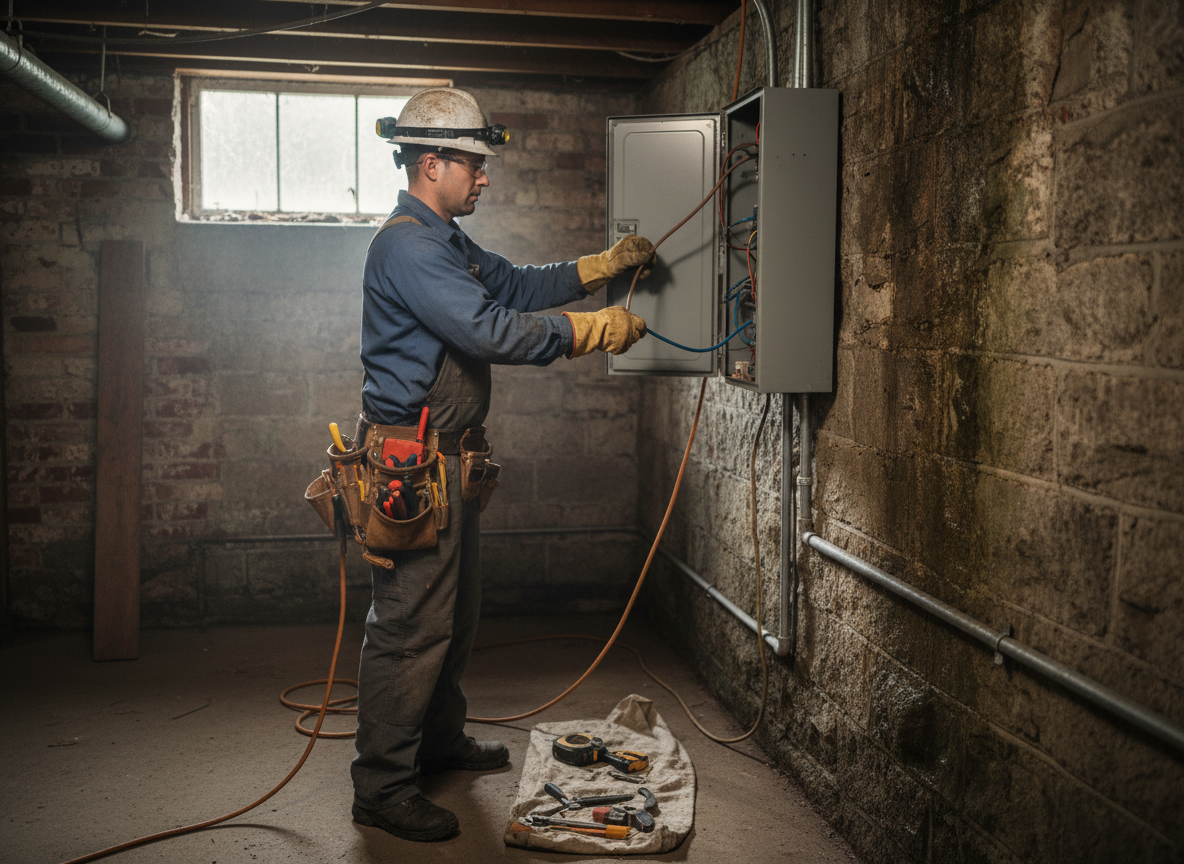
A commercial electrician wires, maintains and repairs the electrical systems in business properties: distribution panels, feeders, branch circuits, lighting, equipment connections and 3 phase power. Electrician Portland Oregon is a licensed, owner operated electrical contractor serving Portland, Oregon businesses since 2011. Commercial diagnosis starts with the one line picture of the building: what the service is, how panels and subpanels are fed, and what the actual measured load is. We check panel schedules against reality, clamp loads on feeders, and thermally scan lugs and busbars before recommending anything, because commercial problems are usually capacity or connection problems, not mystery faults.
Portland's commercial stock complicates the work. Storefronts on the inner east side occupy buildings from the same 1900 to 1940 era as the housing around them, with layers of abandoned wiring from decades of tenants, panels in basements below sidewalk level, and services that predate 3 phase demand. The October through May wet season corrodes exterior disconnects and rooftop equipment connections, and winter windstorms take down service masts on older buildings. Restaurant conversions are a steady driver: gas to electric cooking lines and heat pump HVAC land big loads on services sized for a retail tenant. Utility coordination splits by territory, PGE for most of the city and Pacific Power in parts of west and southwest Portland, and their service upgrade timelines differ, which affects project schedules.
Commercial electrical work in Portland is permitted through Portland Permitting and Development and must meet the Oregon Electrical Specialty Code. Tenant improvements typically need plan review before a permit issues, then a rough in inspection with walls and ceilings open and a final inspection at completion. Commercial rules differ from residential in ways owners do not expect: EMT and other raceway instead of NM cable in most assemblies, engineered load calculations for service changes, working clearance in front of equipment that cannot be given up to storage, and egress and exit lighting requirements that get checked at final. We build the inspection schedule into the project timeline so a general contractor is not waiting on cover.
The failure modes in commercial buildings are specific. Shared neutrals on multiwire branch circuits from old tenant work cause breakers to trip in pairs and overheat neutrals when handle ties are missing. Aluminum feeder lugs that were never torqued to spec show up as warm panels and flickering under load, and a thermal camera finds them before they fail. In basements below grade we find corrosion sitting on busbars from decades of seasonal humidity. And on 3 phase services, a lost phase from a utility side fault mimics dozens of separate equipment failures at once, so we check incoming voltage on all 3 phases before touching a single machine.
Technician insight
On 3 phase services in Portland, a lost phase from a utility side fault looks like dozens of separate equipment failures at once, so incoming voltage gets checked on all 3 phases before anyone touches a machine. The other quiet hazard here is aluminum feeder lugs that were never torqued to spec, which read fine until a thermal camera finds them cooking under load.
Gas to Electric Kitchen Conversion on the Inner East Side
A restaurant owner taking over a former retail space on the inner east side wanted an electric cooking line and heat pump HVAC in a building from the 1920s. The existing service had been sized for a retail tenant, and the basement panel sat below sidewalk level with layers of abandoned wiring from decades of previous occupants. We measured the actual loads, produced the load calculation, and coordinated plan review with Portland Permitting and Development before demolition started. The service needed a feeder upgrade, so we scheduled the utility work with PGE early to keep it off the critical path. During construction we traced and removed the dead legacy wiring, ran EMT for the new equipment circuits, and added a shunt trip breaker for the hood suppression system. The permit closed at final with typed panel schedules delivered, and the kitchen passed without a correction notice.
Commercial Electrician Services We Offer
✓Tenant Improvement Wiring
Complete electrical build outs for retail, office and restaurant spaces, from plan review through final inspection.
✓Commercial Lighting Installation and Retrofit
New lighting layouts and LED retrofits, including occupancy controls and exterior fixtures that survive the wet season.
✓3 Phase Panel and Feeder Work
Panelboard installation, feeder upgrades and circuit additions on 208V and 480V systems.
✓Restaurant and Commercial Kitchen Wiring
Dedicated equipment circuits, shunt trip breakers for hood suppression, and gas to electric cooking line conversions.
✓Dedicated Equipment Circuits
Properly sized circuits for compressors, HVAC, machinery and point of sale systems, with voltage drop checked on long runs.
✓Exit and Emergency Lighting
Code required egress lighting, testing and repair, the item most often written up at commercial final inspections.
✓EV Charging for Business Properties
Level 2 charging for employee and fleet parking, including load management when the service is tight.
✓Electrical Maintenance and Thermal Scanning
Scheduled panel torque checks, infrared scans and labeling updates for building owners and property managers.
How it works
- 1
Site Evaluation
We review the service, panel schedules and measured loads, and scan connections under load, so the quote reflects the building as it actually is.
- 2
Scope, Plans And Permit
We produce the scope and load calculation, coordinate plan review where required, and file the permit with Portland Permitting and Development.
- 3
Construction
Work is phased around your business hours where possible, with shutdowns scheduled in advance and rough in inspections booked to keep the GC on schedule.
- 4
Final Inspection And Documentation
We close the permit at final, deliver updated panel schedules and as built notes, and label everything we touched.
Pricing
Commercial work is priced from the scope, and the spread is wide: small jobs like added circuits or lighting repairs often land between $500 and $2,500, storefront tenant improvements commonly run $5,000 to $30,000 or more, and service or feeder upgrades scale with amperage and utility requirements. The big price movers are whether plan review is required, whether the building needs raceway runs through finished ceilings, how much abandoned legacy wiring has to be traced and removed, whether work must happen after hours, and whether PGE or Pacific Power has to modify their service. We quote from a site visit and measured loads, never from square footage alone.